
Sealing Concrete After Pressure Washing: Is It Worth It?
Once a driveway or patio is freshly cleaned, the question comes up: should you seal it? Sealing has real benefits, but it is not automatically worth it on every surface, and a bad seal is worse than none. Here is a straight answer for the Lower Mainland's wet climate.

What sealing actually does
A concrete sealer soaks into or coats the surface and reduces how much water, dirt and stains can penetrate the pores. On a clean surface, that means spills sit nearer the top where they are easier to remove, moss and algae have a harder time taking hold, and the concrete resists the freeze-thaw damage that our winters cause when water gets into the pores.
On decorative surfaces like stamped or coloured concrete and exposed aggregate, a sealer also deepens the colour and can lock loose aggregate in place, which is a genuine cosmetic and structural benefit.
When it is worth it, and when it is not
Sealing tends to pay off on decorative concrete, on surfaces that stain easily like driveways and garage floors, and anywhere you want to stretch the time between cleans. It is less essential on plain, rough broom-finished concrete that is not staining and that you are happy to just clean periodically.
Timing and prep matter. Sealer must go onto clean, fully dry concrete, so it is best paired with a professional clean and a dry window afterward. Sealing over a damp or dirty surface traps the problem underneath and can leave a cloudy or peeling finish, which is the bad-seal outcome you want to avoid.
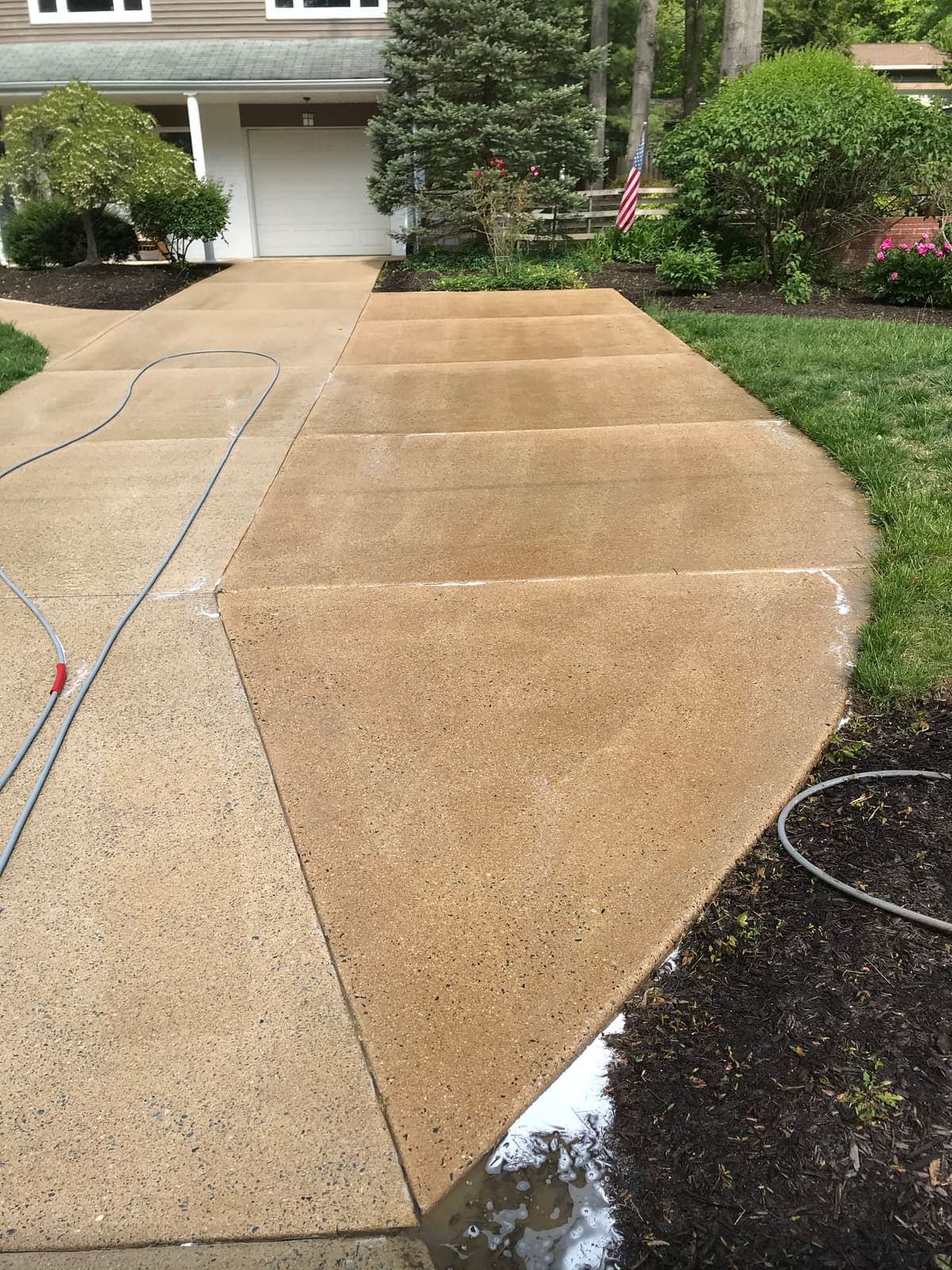
The practical takeaway
If you have decorative concrete or a driveway that keeps staining, sealing after a clean is usually worth it and reduces future maintenance. If it is plain concrete you do not mind cleaning now and then, you can skip it without much downside.
Sealers also wear and need reapplying every few years depending on traffic and product, so it is an ongoing choice rather than a one-time fix. If you are weighing it, ask for an honest recommendation based on your specific surface rather than a blanket upsell.