
Cleaning Exposed Aggregate Without Popping the Stones Loose
Exposed aggregate is everywhere in Lower Mainland driveways and walkways for good reason, the pebbled finish is attractive, grippy underfoot, and hides everyday dirt. But that same texture is a thousand little anchor points for moss and grime, and once it takes hold, aggregate can look worse than any plain slab.
It is also the surface most often ruined by DIY cleaning. Here is how the pros clean it without popping stones loose.
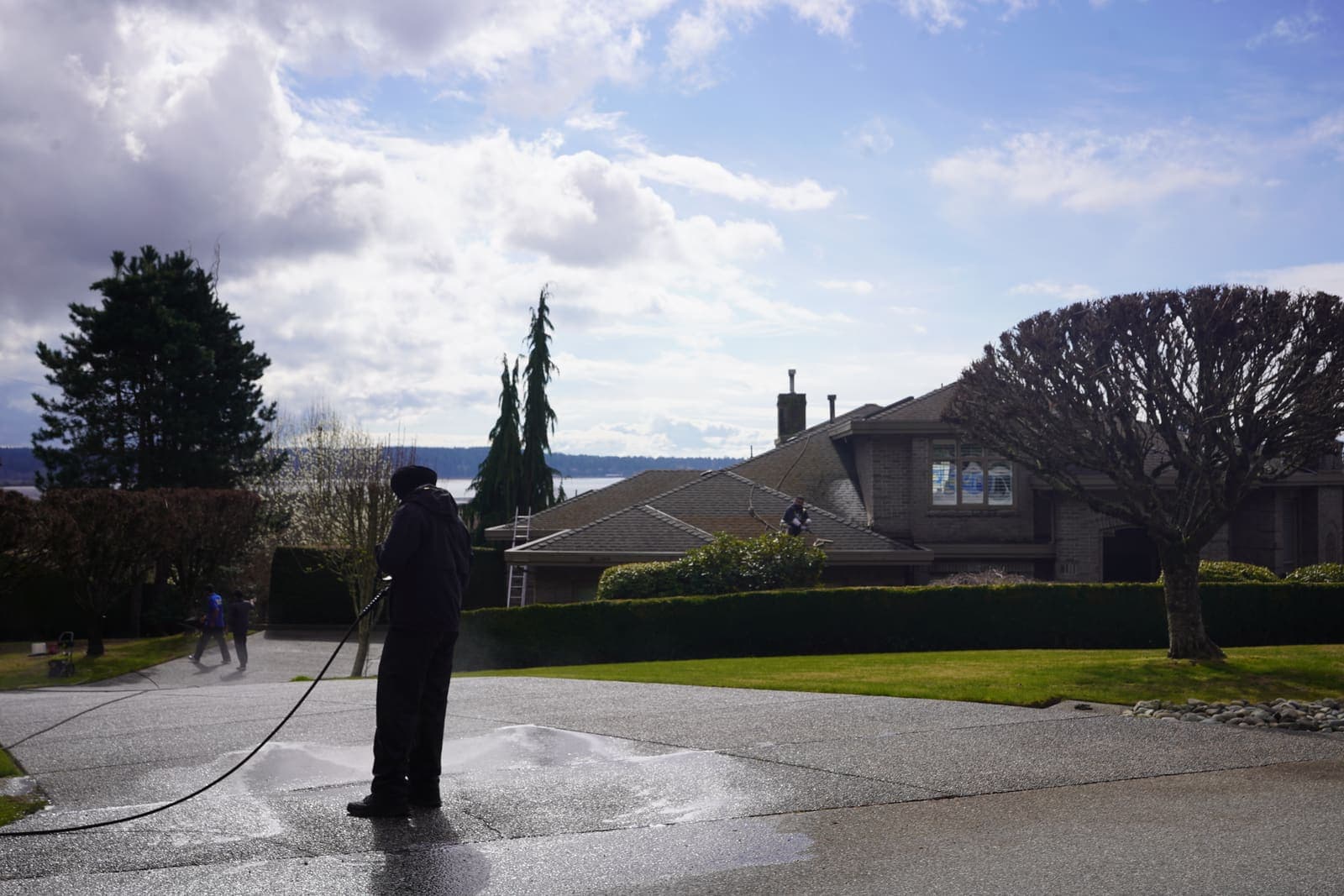
Why aggregate is trickier than plain concrete
On a smooth broom-finished slab, a surface cleaner glides across at even pressure and the job is straightforward. Aggregate is the opposite: the exposed pebbles sit in a cement matrix, and too much pressure held too close chips that matrix and knocks stones out, leaving bare pockets that never look right again.
The texture also traps moss deep between the stones, so a quick surface pass leaves green in the low spots. Aggregate rewards patience and the right technique, not brute force.
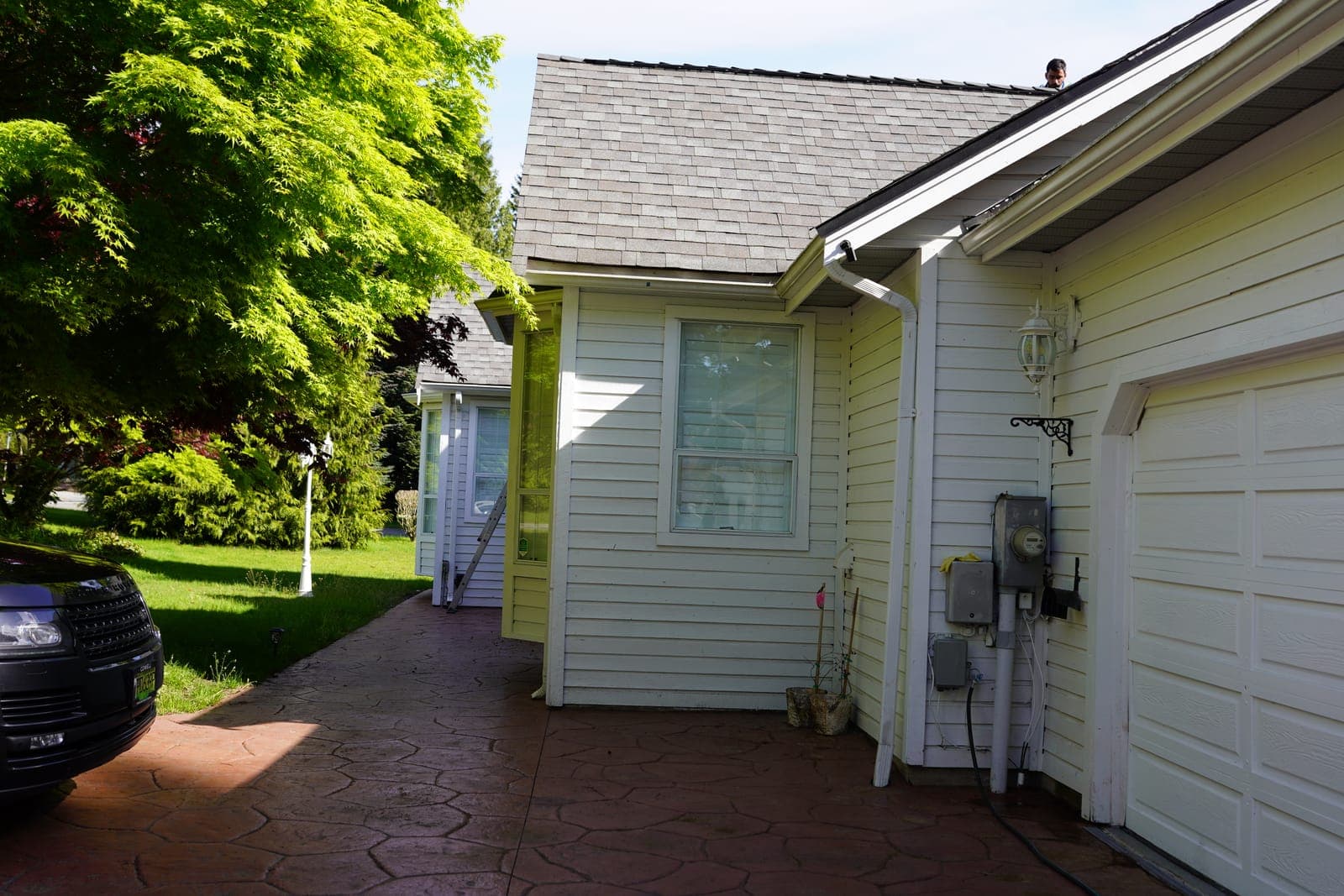
Treat first, then wash at controlled pressure
The method is treat, then wash. A biodegradable moss and algae treatment goes down first and is left to kill the growth at the root, down in the gaps a nozzle cannot reach. That chemistry does the hard part, so the wash can be done at a controlled pressure and distance that cleans the stone without attacking the matrix around it.
The wash itself uses even, overlapping passes rather than lingering in one spot, keeping the tip back from the surface. Done right, the original colour and sparkle of the aggregate comes back and every stone stays exactly where it belongs.
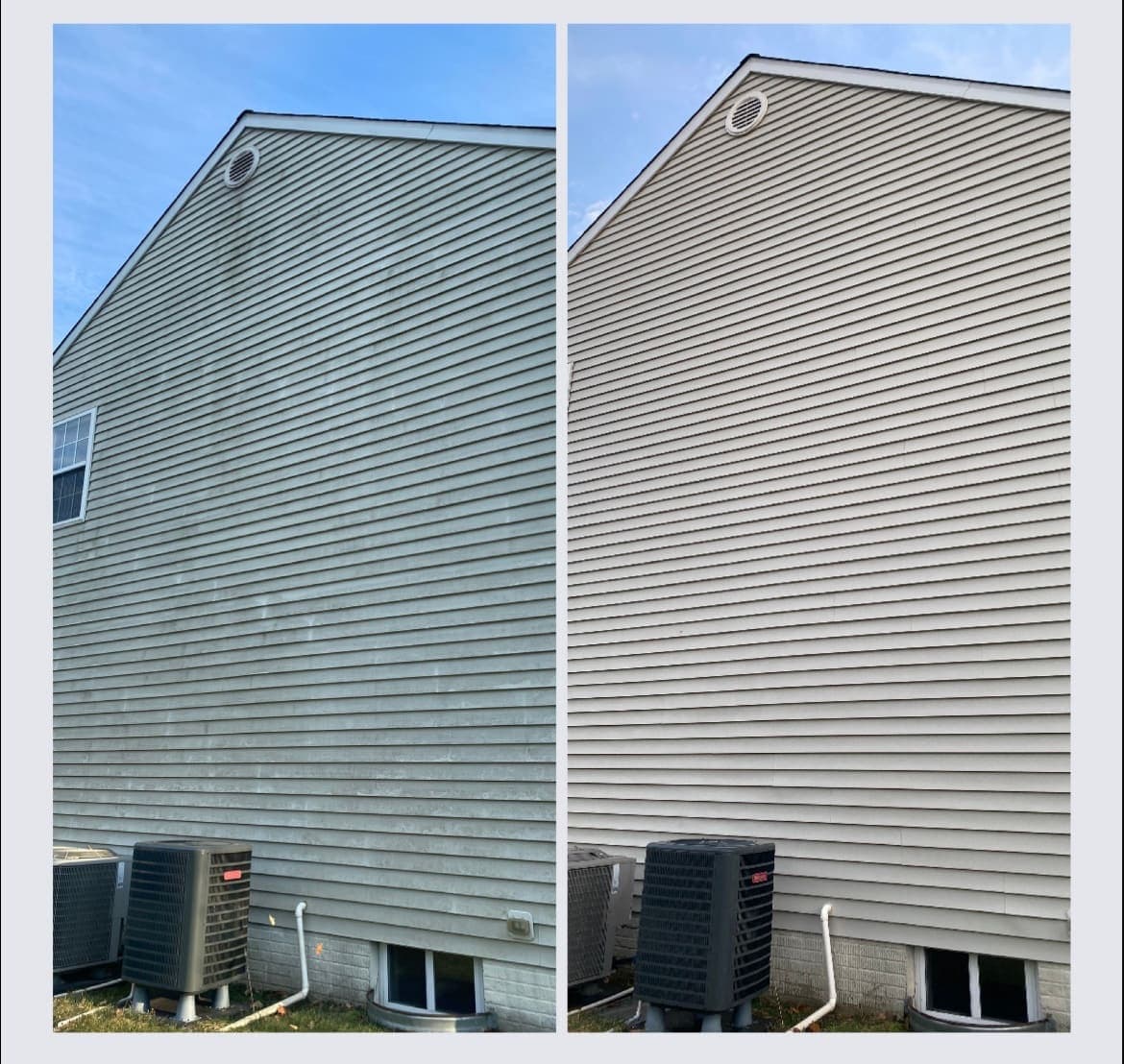
Keeping it clean and considering a sealer
After a clean, a post-treatment slows moss from re-establishing in the texture. On aggregate, a penetrating sealer is also worth considering, it makes the surface easier to rinse, helps lock the stones, and slows how fast dirt and moss settle back into the gaps.
Because aggregate condition varies so much, pricing is best confirmed from a couple of photos. A lightly greyed walkway is a straightforward maintenance clean; a driveway buried under years of moss is a heavier restoration and priced accordingly. A free quote will tell you which you are dealing with.