Mossy Concrete Stairs and Steps: Removing the Slip Hazard Before Someone Falls
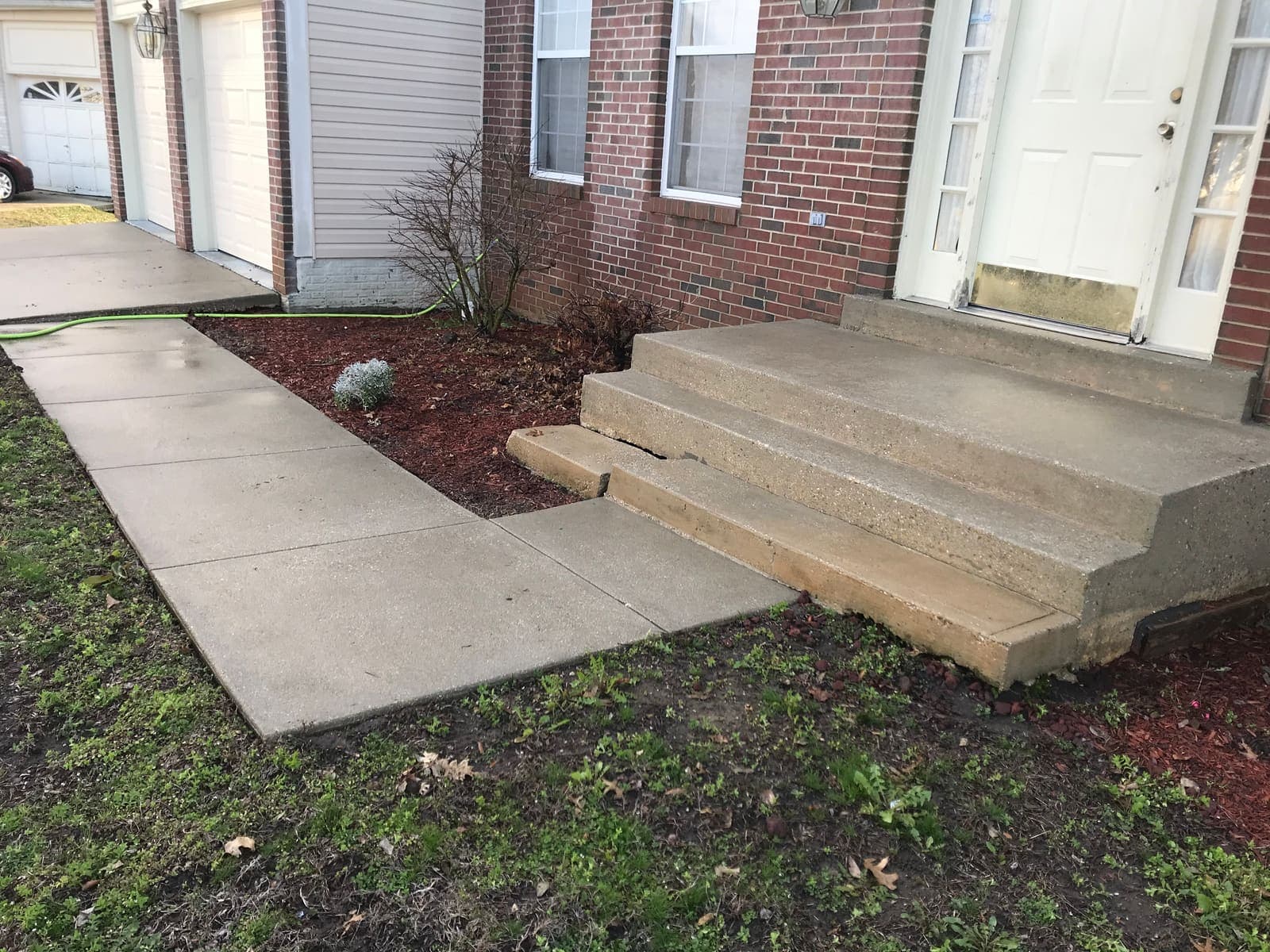
Of all the exterior surfaces we clean, outdoor stairs are the one where the stakes are more than cosmetic. Wet moss and algae on concrete steps are one of the most common causes of slip-and-fall injuries at home in BC, and stairs concentrate the risk exactly where a fall does the most damage.
Here is why steps get so slick in our climate and how they are cleaned to be genuinely safe again.
Why stairs get slick first
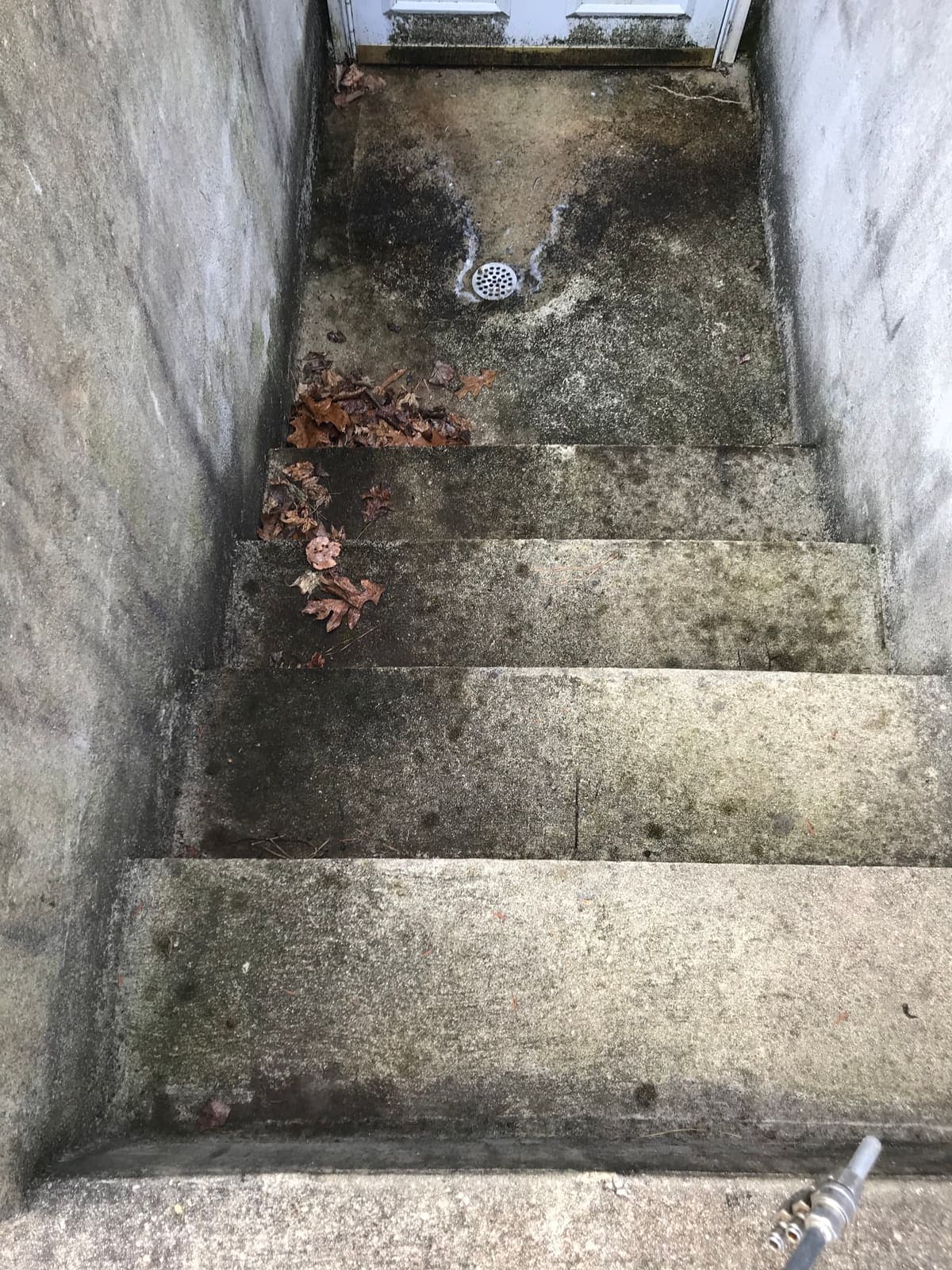
Steps collect and hold moisture more than open slabs, they are often shaded by railings, walls or overhangs, they stay damp longer, and their horizontal treads pond water. That is a perfect bed for the thin black algae film and green moss that turn concrete into a skating rink when wet.
Because the growth builds gradually, people stop noticing how slick their own steps have become. The danger is highest in our wet, dark months, which is exactly when the steps are wettest.
Treat, wash, and do not etch the concrete
The correct clean is the same treat-then-wash approach used on any concrete: a biodegradable treatment kills the moss and algae at the root, including in the pores where a quick scrub leaves it, and the steps are then washed at a pressure matched to the surface. Restoring the original texture and grip is the whole point.
It matters that the pressure is controlled: too much, held too close, etches concrete and can actually leave a rougher, faster-fouling surface. Edges, corners and stair nosings get detailed by hand so no slick strip is left behind.
Keeping steps safe through winter
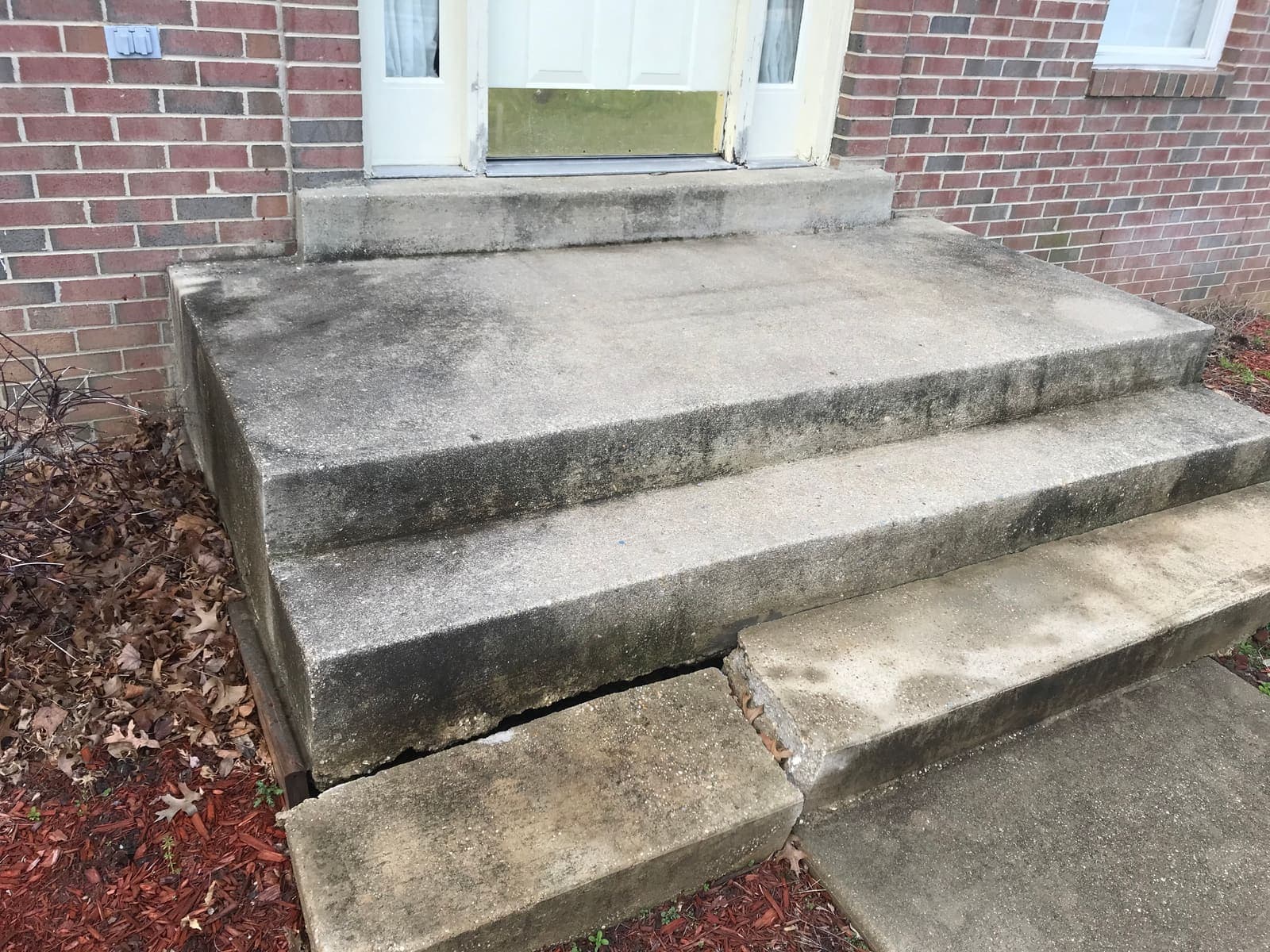
A post-treatment slows the moss from coming back, and a few habits help: keep the steps clear of leaf litter, trim back overhanging growth that drips and shades, and make sure downspouts are not draining across the stairs. For a household with older residents or young kids, putting the steps on a regular maintenance clean is worth far more than the modest cost.
Brick and stone steps are cleaned the same careful way, the growth is treated first and the pressure matched to the material so nothing is scarred.