
First-Freeze Checklist: Protecting Outdoor Surfaces
The Lower Mainland does not get a hard, sustained freeze, and that is exactly what makes our winters sneaky for outdoor surfaces. We get repeated freeze-thaw swings, wet, then cold, then wet again, and that cycle does quiet damage to surfaces that are dirty, mossy or holding water. A little preparation before the first cold snaps protects them. Here is a checklist.
Why freeze-thaw is the problem
When water gets into the pores of concrete, pavers, stone or the gaps under moss and then freezes, it expands, prying at the material. Repeated over a winter of freeze-thaw swings, that contributes to surface spalling, cracking and general deterioration. Moss makes it worse by holding water against surfaces exactly where it can freeze, and a mossy, wet walkway or step also becomes a genuine ice-and-slip hazard.
So going into winter with clean, free-draining surfaces, rather than dirty, mossy, water-holding ones, is what protects them through the cold snaps.
The first-freeze checklist
Before the cold arrives, work through these:
- Clean moss and algae off walkways, stairs and driveways so they are not holding water, and are not a slip-and-ice hazard
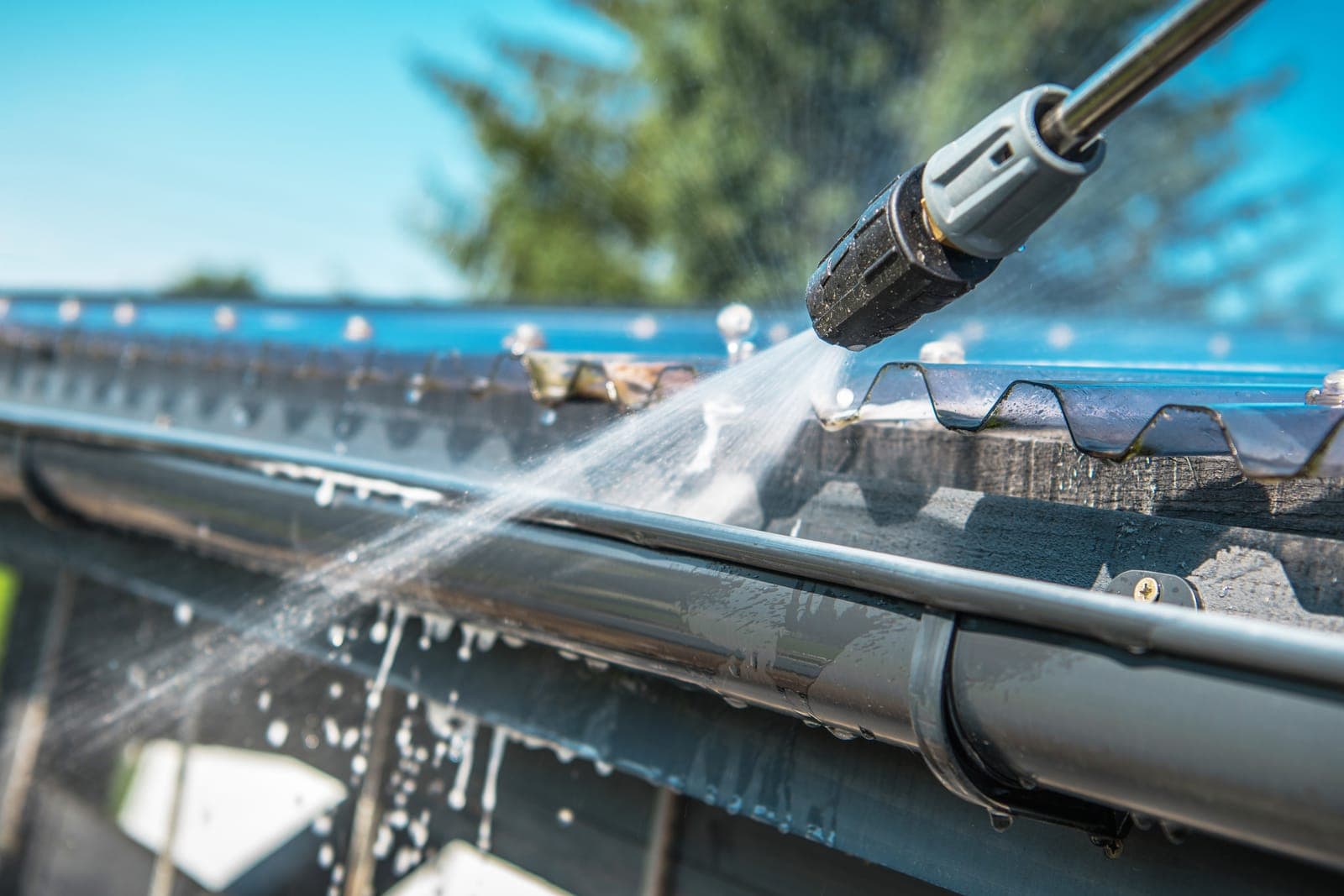
- Clear and flush the gutters so water drains instead of pooling and freezing
- Make sure downspouts carry water away from the foundation and hard surfaces
- Clear standing-water spots and improve drainage where surfaces pond
- Consider sealing bare concrete or pavers before winter so water penetrates the pores less
Why timing matters
The point of doing this before the first freeze is that you are preventing the freeze-thaw damage and the ice hazards rather than dealing with them mid-winter. A clean, sealed, well-draining surface handles the cold snaps far better than a mossy, wet one, and it is safer underfoot through the dark, icy mornings.
It overlaps with the general fall and pre-winter preparation, so it is efficient to handle it in the same window. A quick assessment shows which surfaces are most at risk and worth clearing or sealing before the cold.