
Cedar and Wood Siding: Cleaning Without Stripping the Finish
Wood and cedar siding gives a home real warmth, and it asks for real maintenance in return, especially in coastal BC. It greys under UV, grows algae and mildew on the damp shaded sides, and, unlike vinyl or fibre cement, it can be permanently damaged by cleaning that is too aggressive.
Here is how wood siding is cleaned so it comes back clean without stripping the finish or wrecking the grain.
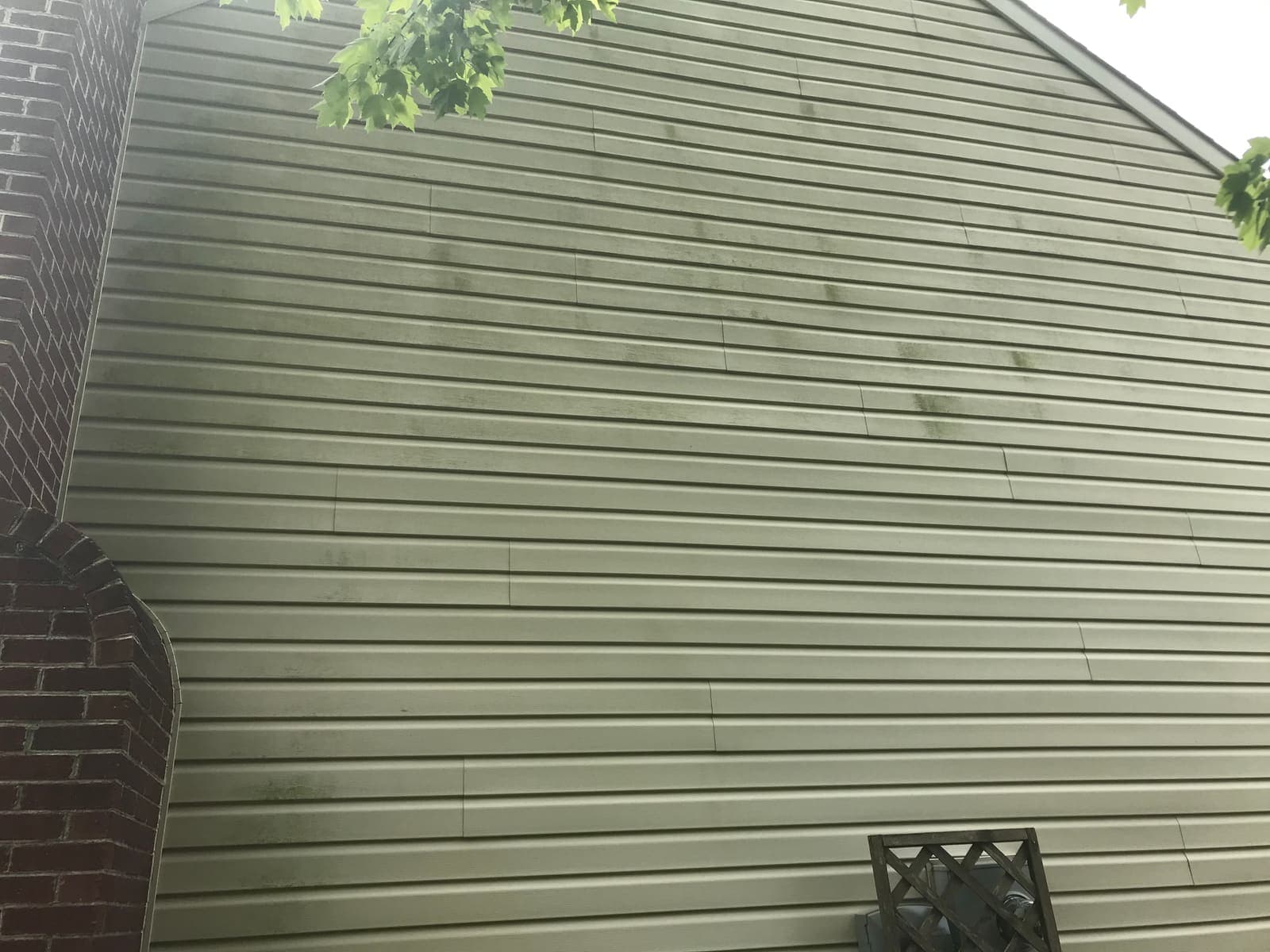
What wood siding is up against
Three things age wood siding here: UV greying of the surface, algae and mildew on the damp faces, and the slow breakdown of whatever stain or finish is protecting it. Left uncleaned, the growth holds moisture against the wood, which accelerates the greying and can lead to rot at the vulnerable spots.
Because wood is soft and the finish is thin, the cleaning has to be gentle enough not to raise the grain, strip the stain unevenly or drive water behind the boards.
Gentle cleaning, with the grain
Wood siding is soft washed: a wood-safe cleaner breaks down the algae, mildew and surface grime, and it is rinsed at low pressure. High pressure is avoided because it furs the grain, strips finish in streaks and damages the wood, the same rule that applies to decks and fences.
Where the finish is failing or the wood has gone grey, cleaning reveals the true state of the siding and prepares it for re-staining, since a clean, sound surface is what any new finish needs to bond to.
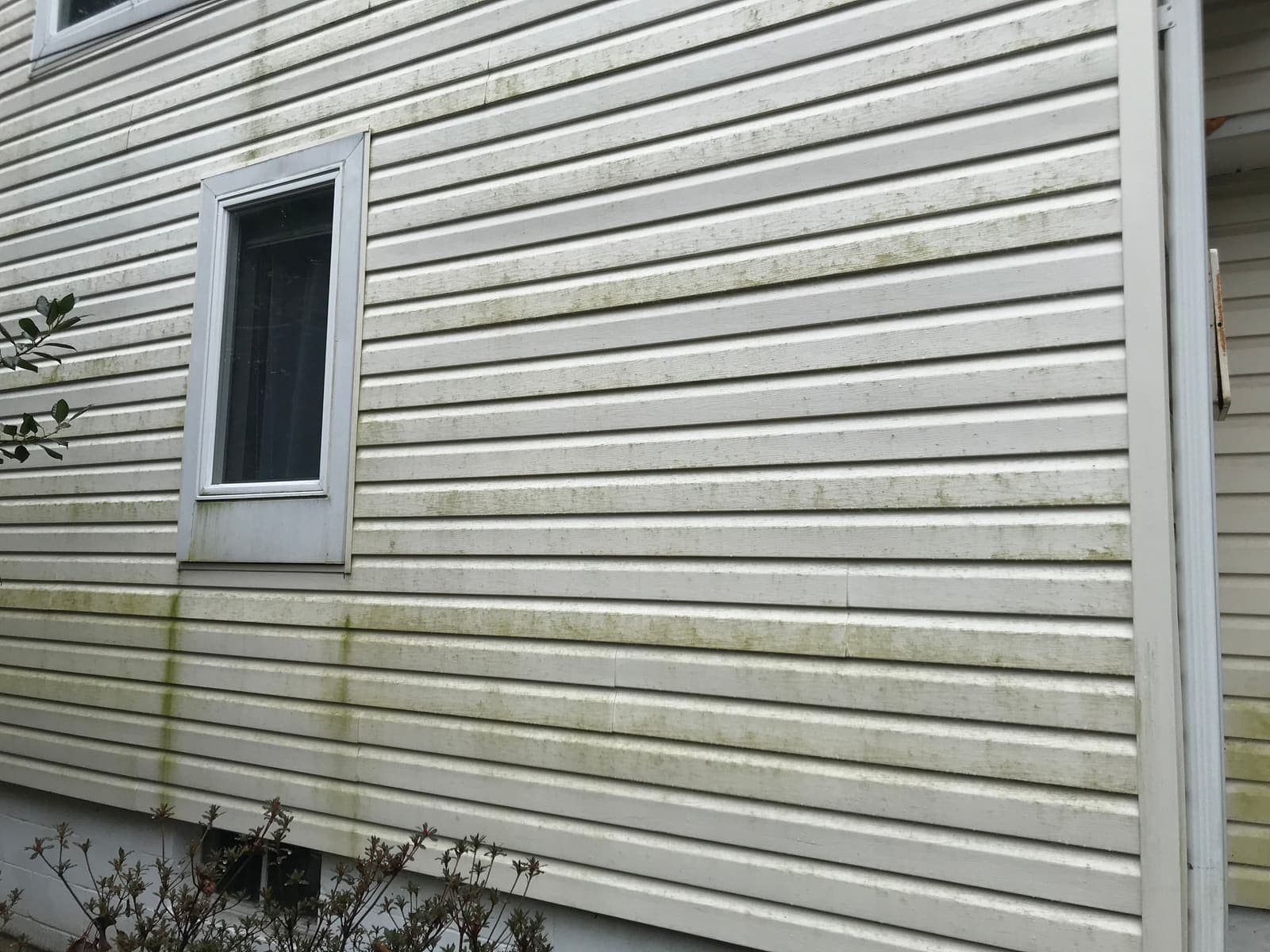
Cleaning as part of protecting the wood
For wood siding, cleaning is not just cosmetic, it is maintenance that extends the life of the cladding. Removing the growth and grime, then keeping the finish in good order with re-staining when it is due, is what keeps wood siding sound for decades in a wet climate.
If you plan to re-stain, book the clean first and allow drying time. If you just want to remove the green and grime, a gentle wash does that on its own. Price depends on size, height and condition, and photos are enough for a free quote.