
Stucco Cleaning in the Lower Mainland: Removing Algae Without Damaging the Finish
Stucco is common on Lower Mainland homes, and its texture is exactly what makes it tricky to clean. All those little peaks and pores hold onto algae, mildew and grime, and they trap moisture that keeps the growth fed. It cannot simply be blasted clean without damage.
Here is how stucco is cleaned safely so it comes back even and bright, without cracking, pitting or driving water into the wall.
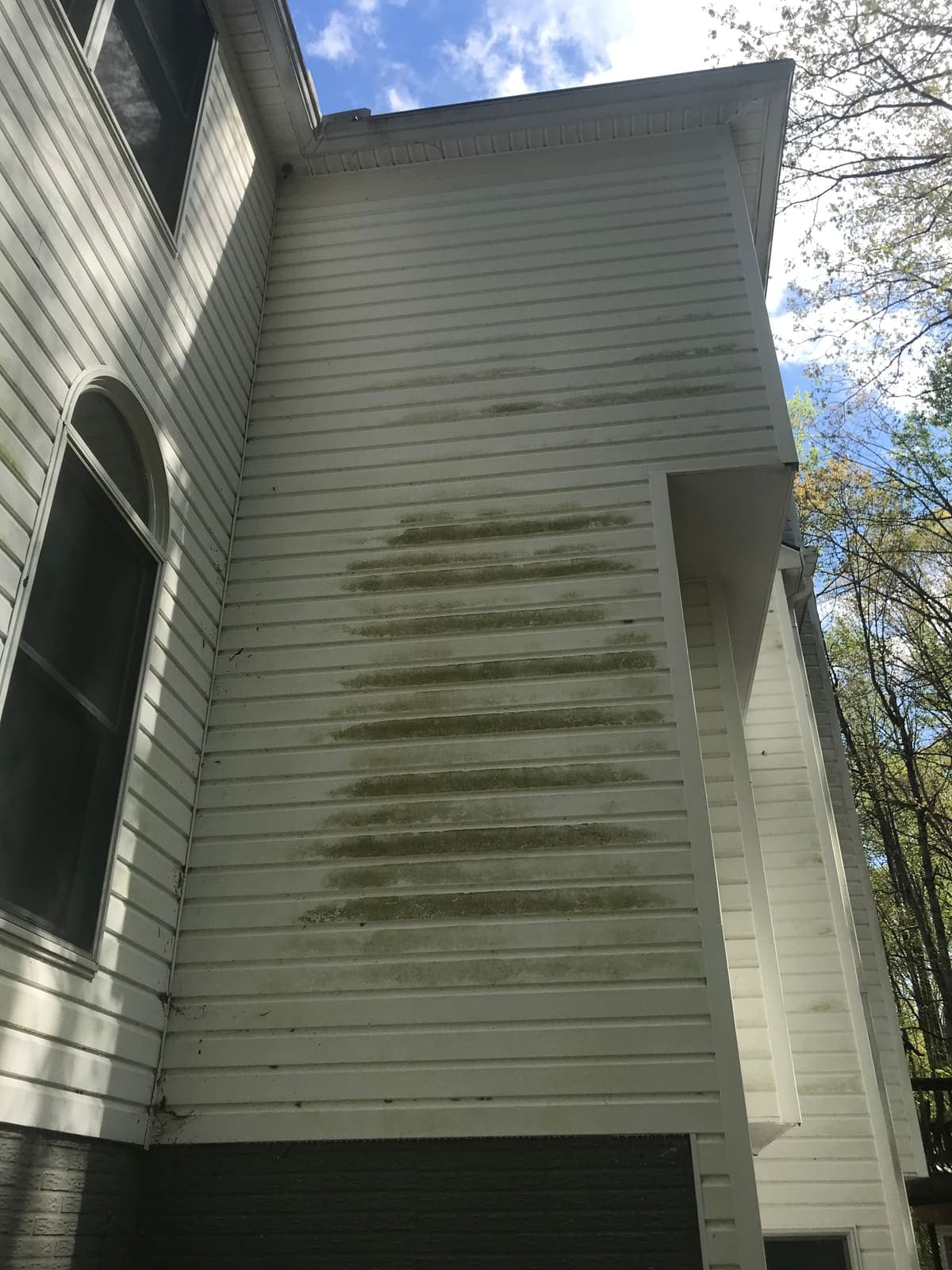
Why stucco greens and grimes up
Stucco is porous and textured, so it grabs airborne algae and holds the damp that lets it spread, particularly on shaded and north-facing walls. The same texture collects dust and pollution, giving the wall a dull, grey, streaked look over time. It is the surface holding the growth, not the stucco failing.
Because stucco sits over a wall system that must stay dry, how you clean it matters as much as whether you clean it.
Soft wash, never high pressure
High pressure is the wrong tool for stucco. It can pit and crack the finish, chip away the surface, and drive water into and behind the stucco, where trapped moisture causes far bigger problems than the algae ever would. Cracks and hollow spots in older stucco make this worse.
The right method is soft washing: a biodegradable detergent is applied at low pressure, given time to break down the algae and grime in the texture, and rinsed gently. The chemistry does the work so no force is needed, and the growth is killed at the root so it stays clean longer.
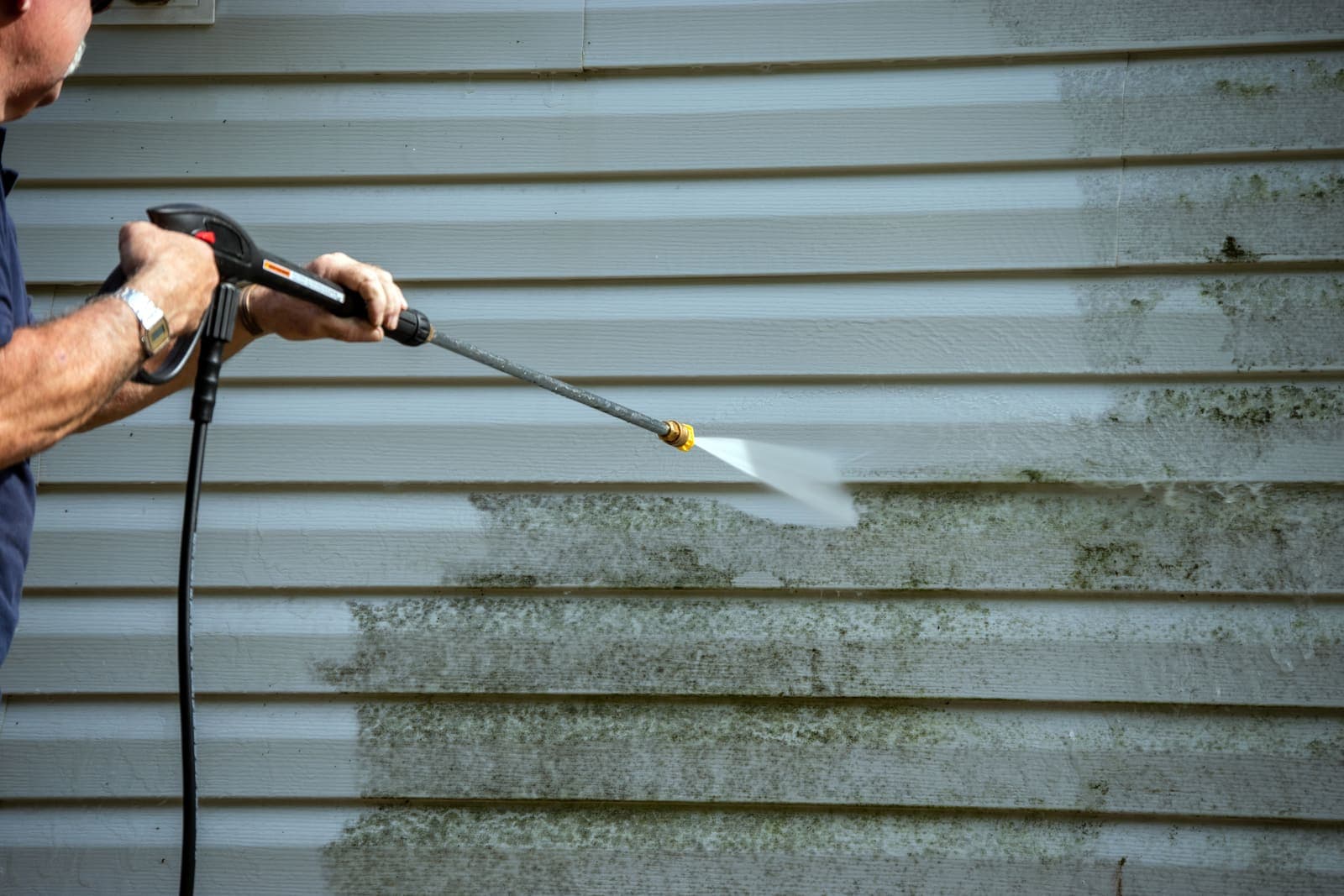
Details and expectations
A careful stucco clean protects the landscaping below, works around windows and light fixtures, and cleans the whole elevation evenly so one wall does not end up brighter than the next. Any cracks or damaged areas are noted rather than blasted, since forcing water into them is exactly what you want to avoid.
Most stucco homes clean up dramatically. Very old, chalky or previously painted stucco can behave differently, so an honest assessment sets expectations first. Price depends on size and storeys, and a couple of photos are enough for a free quote.