
The North Shore Rain Belt: What It Does to Your Roof and Gutters
The North Shore, up against the mountains from West Vancouver through North Vancouver, is one of the wettest inhabited places in Canada. The same rainforest setting that makes it beautiful also makes it exceptionally hard on the exteriors of its homes, especially roofs and gutters. If you live below the mountains, you already know your home greens up faster than most.
Here is what the North Shore rain belt does and how to stay ahead of it.

Why the North Shore is different
As moist Pacific air is pushed up against the North Shore mountains, it dumps far more rain here than even the rest of the already-wet Lower Mainland. Combine that with dense evergreen forest, deep shade, and slopes that keep homes damp, and you have moss and algae conditions turned up to their maximum.
The result is that roofs green up fast, north slopes can be heavily mossed within a few years, and gutters are under near-constant load from both rain and the needle debris that comes with all those conifers.
The toll on roofs and gutters
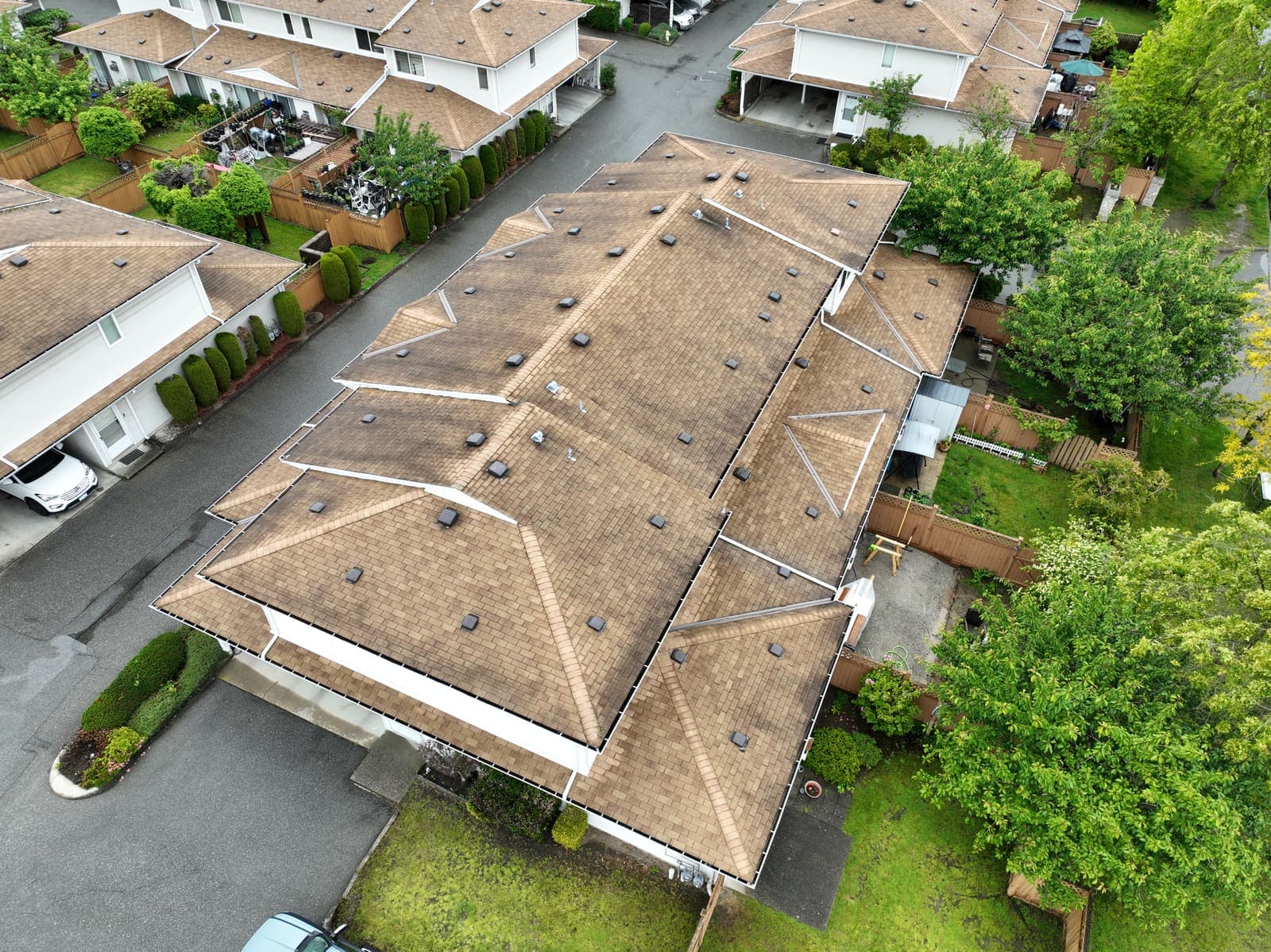
Roofs take the brunt: constant moisture and shade let moss establish quickly and thickly, and left alone it lifts shingles and shortens roof life faster here than in drier spots. Gutters carry an enormous volume of water and fill with conifer needles that mat and plug the downspouts, so overflow and its damage are common when they are neglected.
It is not that North Shore homes are built differently; they simply face more of everything that fouls a roof and clogs a gutter, so the same neglect that a drier home might get away with causes problems here sooner.
Staying ahead of it
The way to cope with the rain belt is a more frequent, proactive rhythm than a drier home needs: soft-wash the roof before moss gets heavy, clean and flush the gutters more often, two to three times a year under conifers, and keep the downspouts draining well away from the foundation for the sheer volume of water involved.
Gutter guards are especially worth considering here, given the needle load and the cost of frequent access on the often-tall, sloped-lot homes. Working with the climate this way is far cheaper than the roof and water damage that neglect brings on in a place this wet.