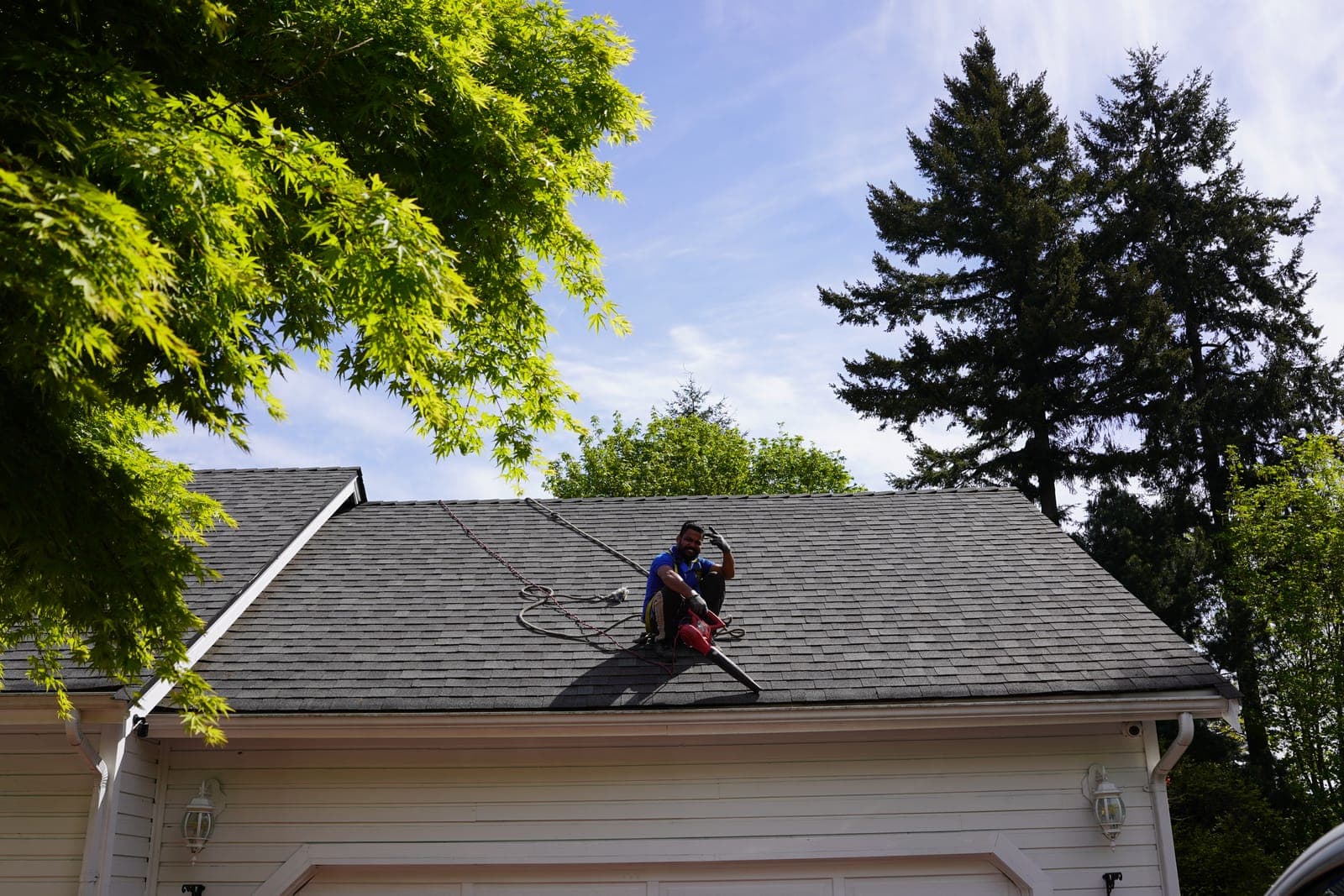
Moss on Your Roof: How Bad Is It Really, and When Does It Become Urgent?
Almost every roof in the Lower Mainland grows some moss, so the real question is not whether you have it but whether it is at the harmless stage or the expensive one. The answer changes what you should do and how quickly.
Here is how to read the severity of your own roof moss, and the point at which waiting starts costing you real money.
The stages of roof moss
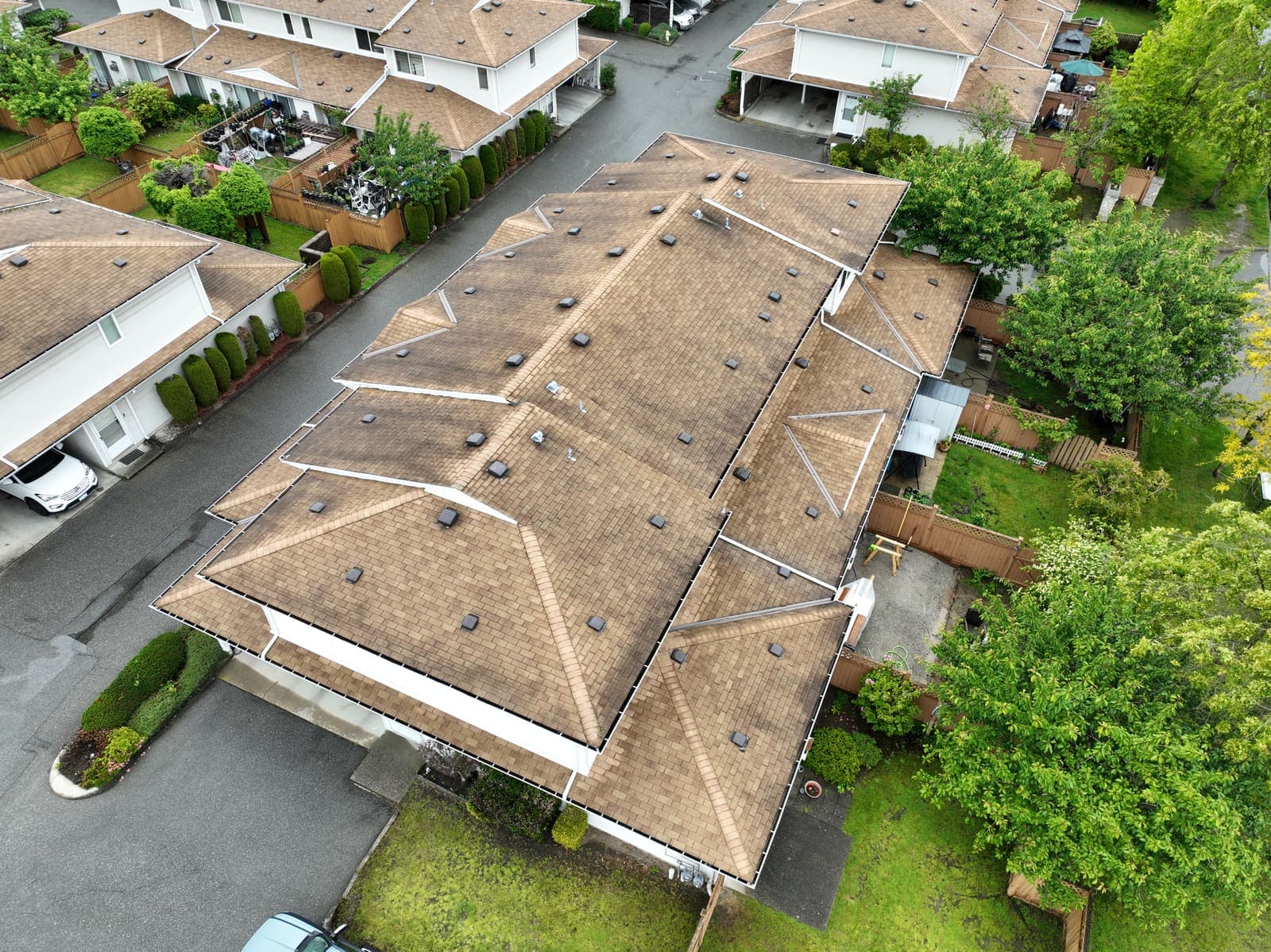
Roof growth moves through stages. First comes a thin dark algae film and light surface staining, which is cosmetic. Next, small green moss cushions form along shingle edges and in the shaded valleys. Left longer, those cushions thicken into mats that lift the shingle edges, hold water against the roof, and start creeping under the courses.
The earlier stages are easy and cheap to treat. The late stage, thick mats lifting shingles, is where moss stops being a looks problem and becomes a leaks-and-repairs problem.
When it becomes urgent
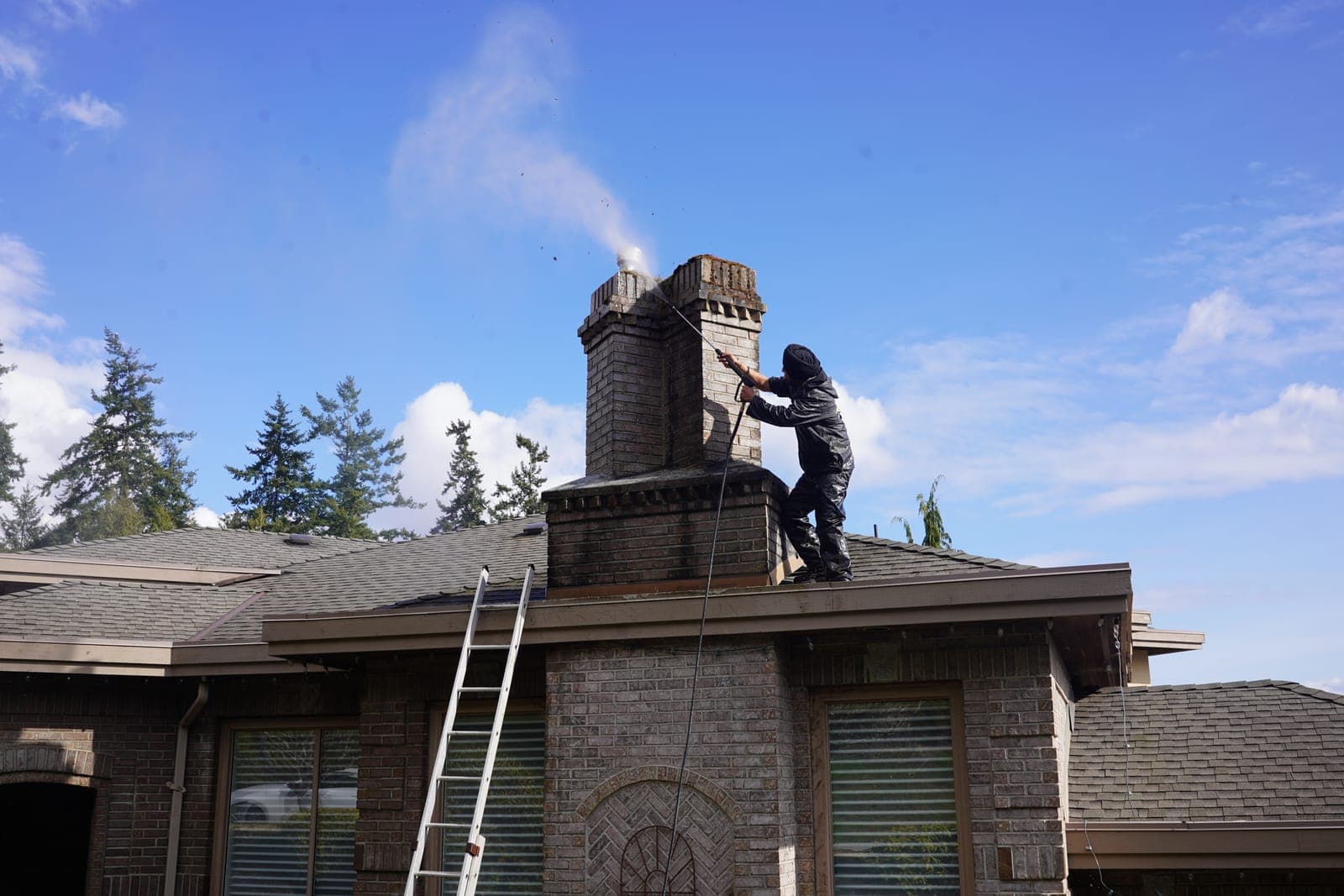
Treat it as urgent when you can see moss lifting or curling shingle edges, when cushions have filled the valleys where water needs to run, or when moss and grit are washing down and clogging the gutters. At that point the moss is holding moisture against the roof deck and working into the seams, which is how leaks start.
It is also more urgent heading into winter. A roof carrying thick moss into the wet, freeze-thaw months is far more likely to develop a problem than one cleaned before the rains set in.
What to do at each stage
For light algae and early moss, a soft-wash treatment kills the growth at the root and the roof is protected cheaply. For heavy, established moss, the bulk is removed by hand and brush first, then soft-washed, which is more labour and cost but still a fraction of roof repair or replacement.
Whatever the stage, the method is never high pressure, which strips shingle granules and voids most warranties. If you are unsure which stage you are at, a few photos and your address are enough for a free assessment and an honest read on urgency.