
How Long Does a House Wash Last Before the Algae Comes Back?
It is a fair thing to want to know before you book: if I pay to have the house washed, how long before it looks like that again? The answer depends heavily on how it is cleaned and on the conditions around your home, and the difference between methods is bigger than most people expect.
Here is what sets the clock, and how to get the most time out of a wash.
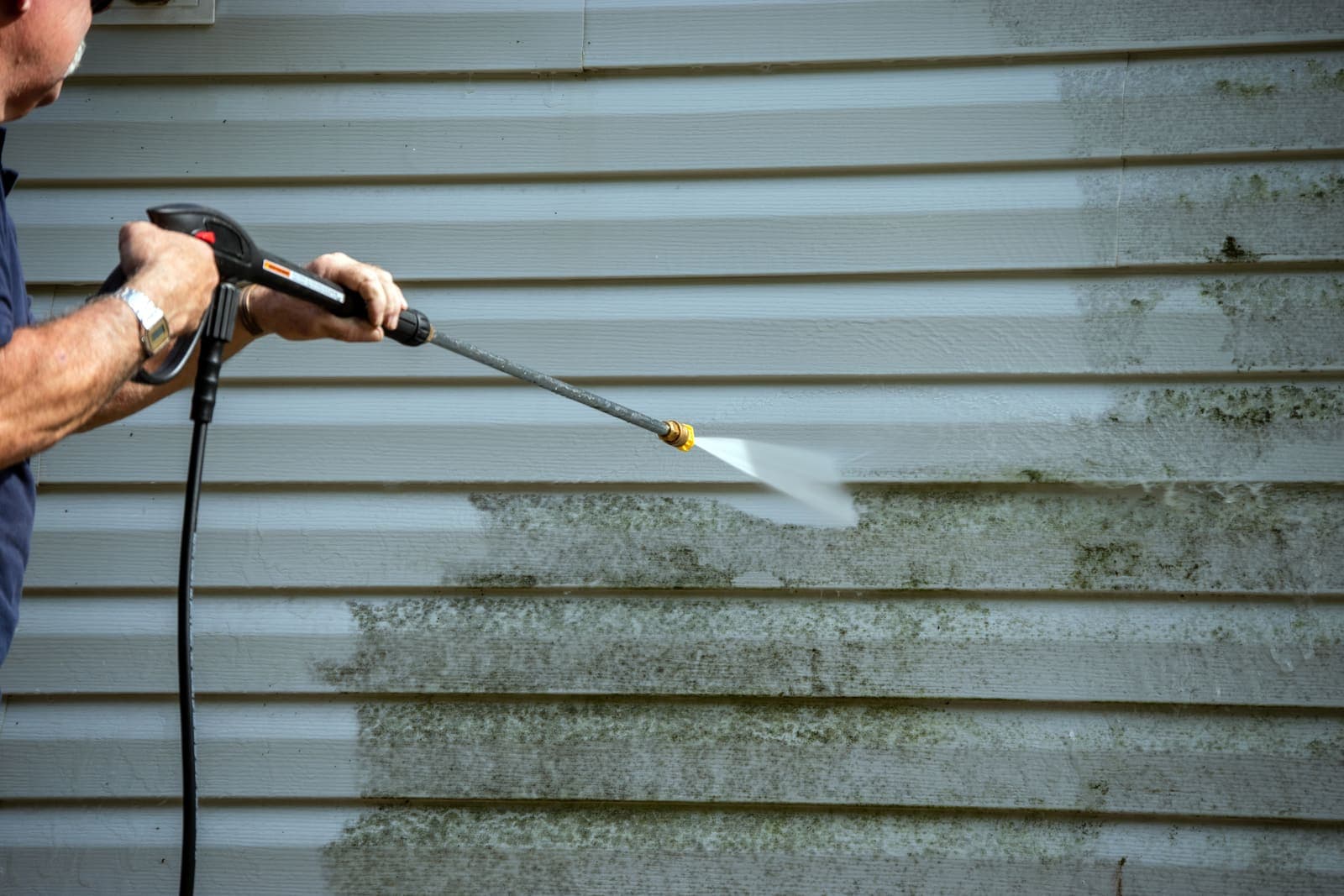
Method decides most of it
The green on siding is living algae. A pressure-only wash knocks the visible film off but leaves the spores behind in every seam and texture, so it regrows quickly, often within a year. A soft wash uses a detergent that kills the algae at the root, so the surface stays clean two to three times longer because the organism is dead, not just displaced.
That is why the cheapest quote can be the most expensive: a blast that looks great for a season and greens up by the next means paying again far sooner.
What your home's conditions do
After method, it is all about moisture and shade. Sunny, open, south-facing walls dry fast and stay clean longest. North-facing walls, walls behind trees or fences, and homes in the wettest pockets of the region green up soonest. A single shaded wall often needs attention before the rest of the house does.
As a working range, most soft-washed homes here look good for one to two years, with sunny sides stretching longer and deep-shade walls shorter.
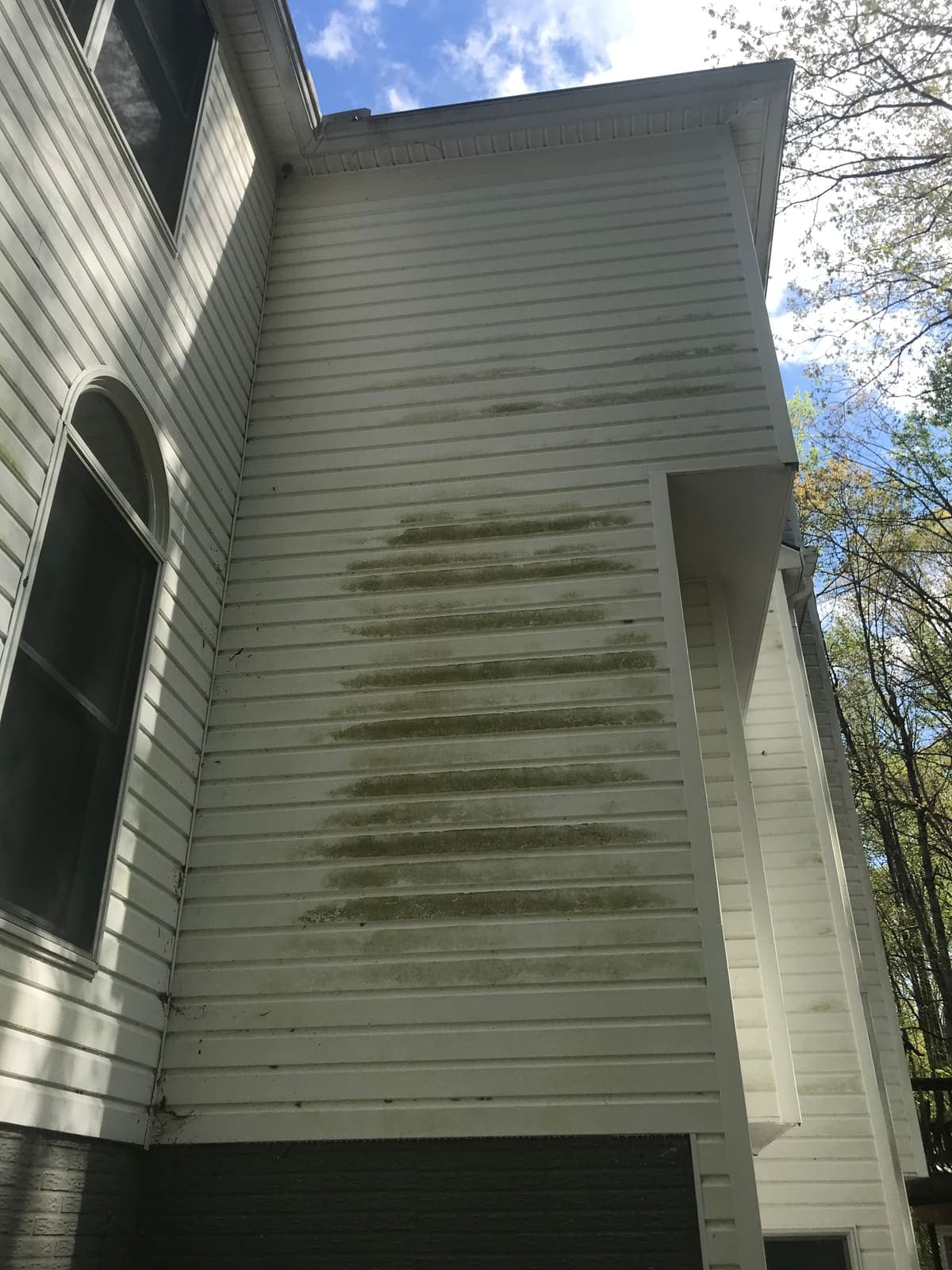
Stretching the time between washes
A few habits buy you months: trim back shrubs and branches so air and light reach the siding, keep gutters and downspouts from spilling down the walls, and redirect any sprinklers hitting the house. None of it stops algae in our climate, but all of it slows the regrowth.
Many homeowners settle into a simple rhythm, a full house wash every year or two, with the shaded side checked more often. Booking the shaded wall on its own between full washes is a cheap way to keep the worst area in check.