
Removing Green Algae From the Shady Side of a Fence
Take a walk along your fence and you will often find a split personality: the sunny side looks weathered but fine, while the shaded side is green, grey and slimy to the touch. It is the same fence and the same age, so what is going on? The answer is shade and moisture, and the fix is straightforward if you avoid the common mistake.
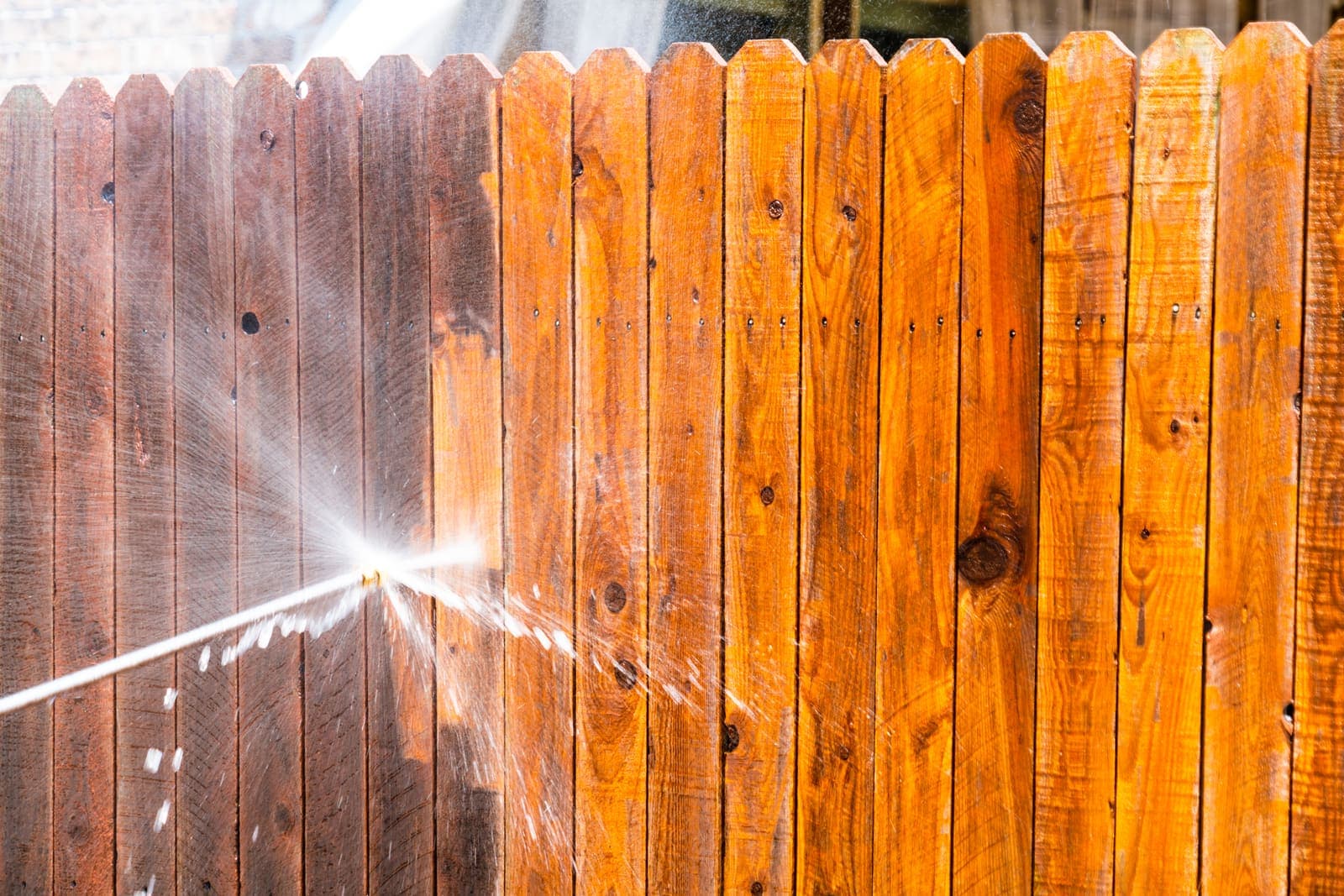
Why the shaded face goes green
Algae needs damp and low light, and the shaded side of a fence, facing north, backing onto a hedge, or blocked by a building, gets exactly that. It stays wet far longer after rain than the sunny side, so algae and mildew colonise it and the wood feels slick. The sunny side dries out and resists the same growth.
It is more than a looks issue on a fence you touch or brush past. A slimy fence transfers green onto clothing and can make an adjacent walkway slippery where it drips.
Clean it without gouging the wood
The mistake is reaching for a pressure washer on full blast. High pressure on a soft wood fence tears out the grain and leaves a furry, striped surface that then greys and greens even faster. Fences follow the same rule as decks: let the cleaner do the work.
A wood-safe cleaner is applied to kill the algae and mildew at the root, then the fence is rinsed at low pressure along the grain. The shaded boards come back to clean, even wood, and because the growth is killed rather than just knocked off, it stays clean much longer.
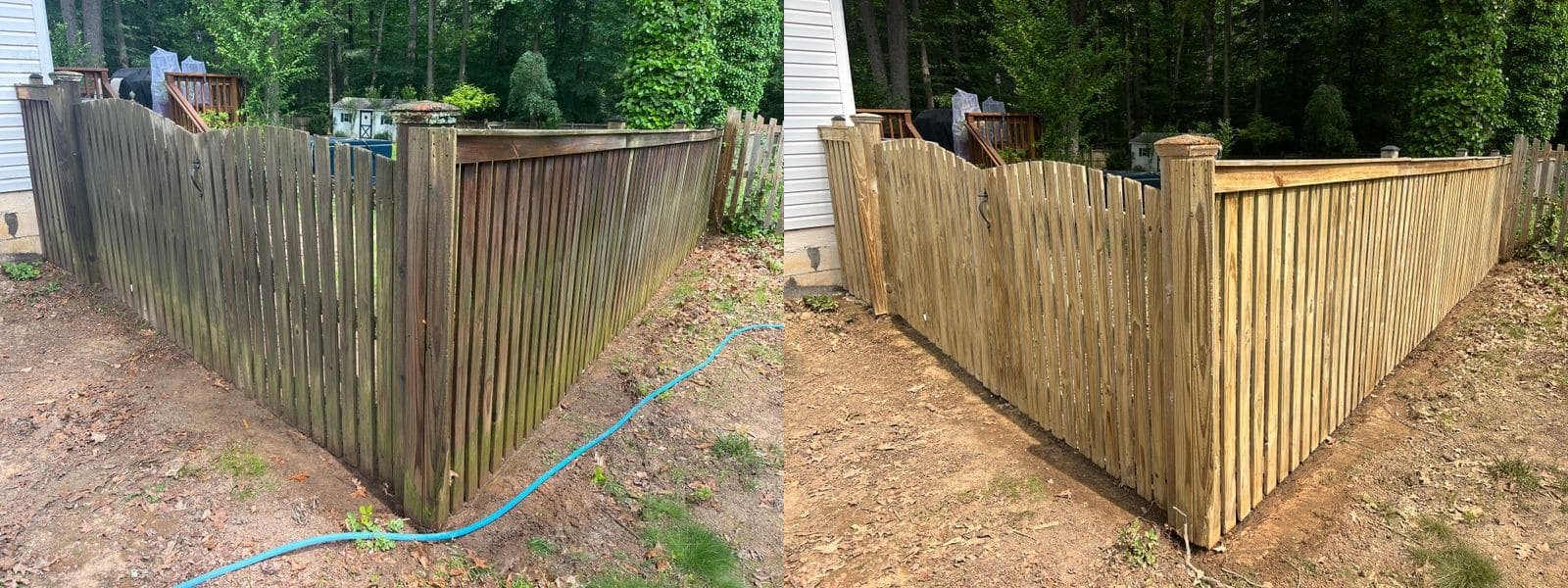
Keeping the green side clean
A few things slow the regrowth on the problem side: trim back the hedge or branches shading it so more air and light reach the wood, and keep sprinklers from hitting the fence. If you plan to stain or seal, do it after cleaning and drying, since a finish over algae-covered wood does not bond and traps the growth.
Often only the shaded side needs regular attention, so it can be cleaned on its own between fuller cleans. Fences are priced by length and height, and a quick photo gets you a free quote.