
Brick Cleaning: Removing Moss, Efflorescence and Grime Safely
Brick has a reputation for being tough, and the brick itself is durable, but it is more porous than it looks and the mortar between it is soft. That combination means brick collects moss, algae and the white haze of efflorescence readily, and it can be damaged by the aggressive cleaning people assume it can shrug off.
Here is how brick walls, steps and patios are cleaned so they come back clean without chewing up the mortar.
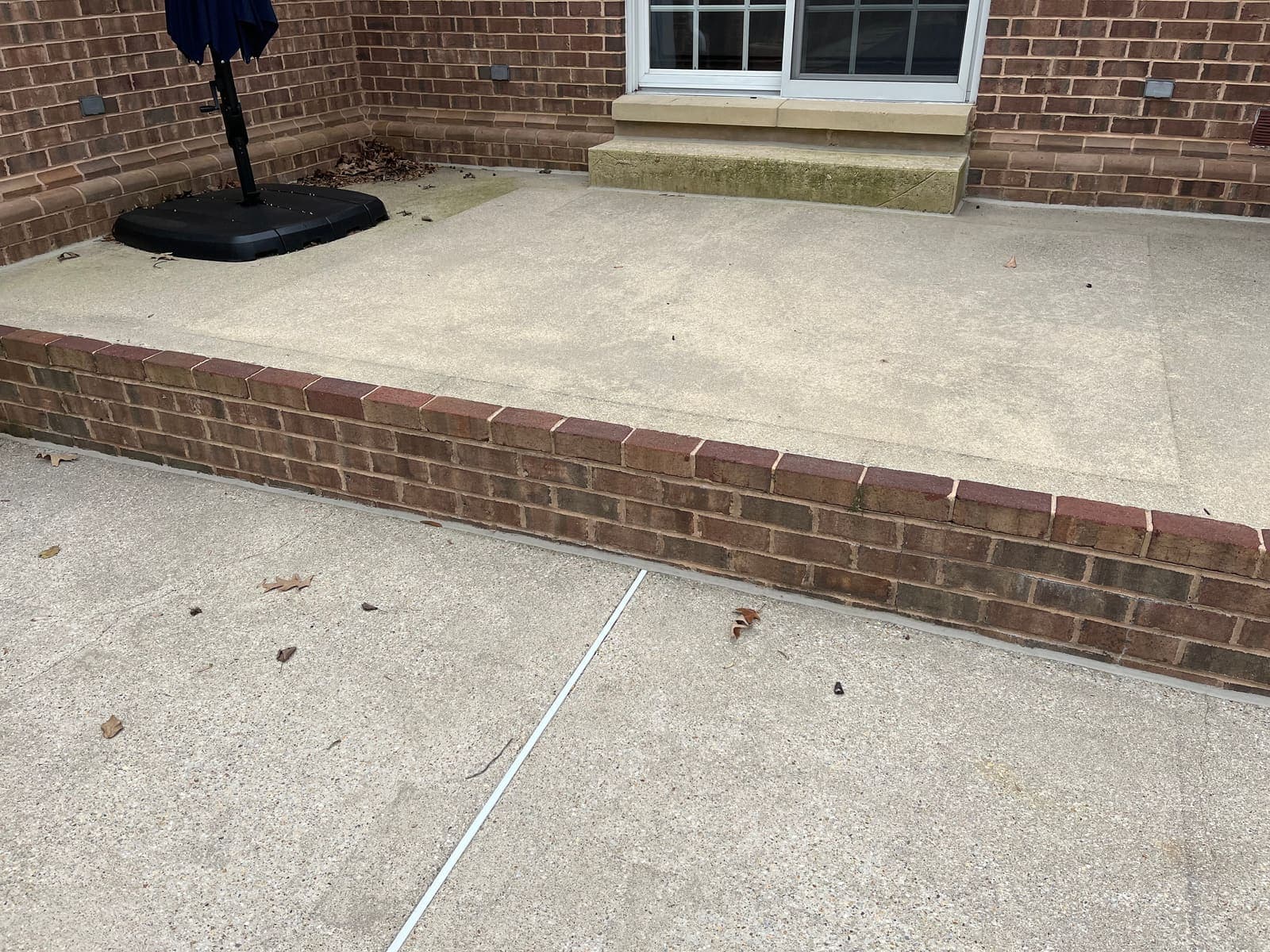
Why brick needs a careful approach
Brick and its mortar joints are porous, so they soak up moisture and give moss and algae plenty to anchor into, especially on shaded walls and north-facing steps. Brick also commonly shows efflorescence, the white chalky salt deposit drawn out of the masonry by moisture.
The vulnerability is the mortar. High pressure aimed at the joints erodes and blows out mortar, which is expensive to repoint and weakens the structure. So the goal with brick is thorough cleaning at a pressure and angle that never attacks the joints.
Treat the growth, control the pressure
As with other masonry, moss and algae are treated first so they die at the root, including down in the pores where a surface pass leaves them. The wash is then done at a controlled pressure, kept off the mortar joints, so the brick faces come clean without eroding what holds them together. Efflorescence gets a purpose-made cleaner rather than plain water, which can worsen it.
Different brick surfaces call for different care: a decorative brick patio, a structural wall, and old heritage brickwork each get an approach matched to their condition. Softer, older brick and lime mortar in particular need a gentle hand.
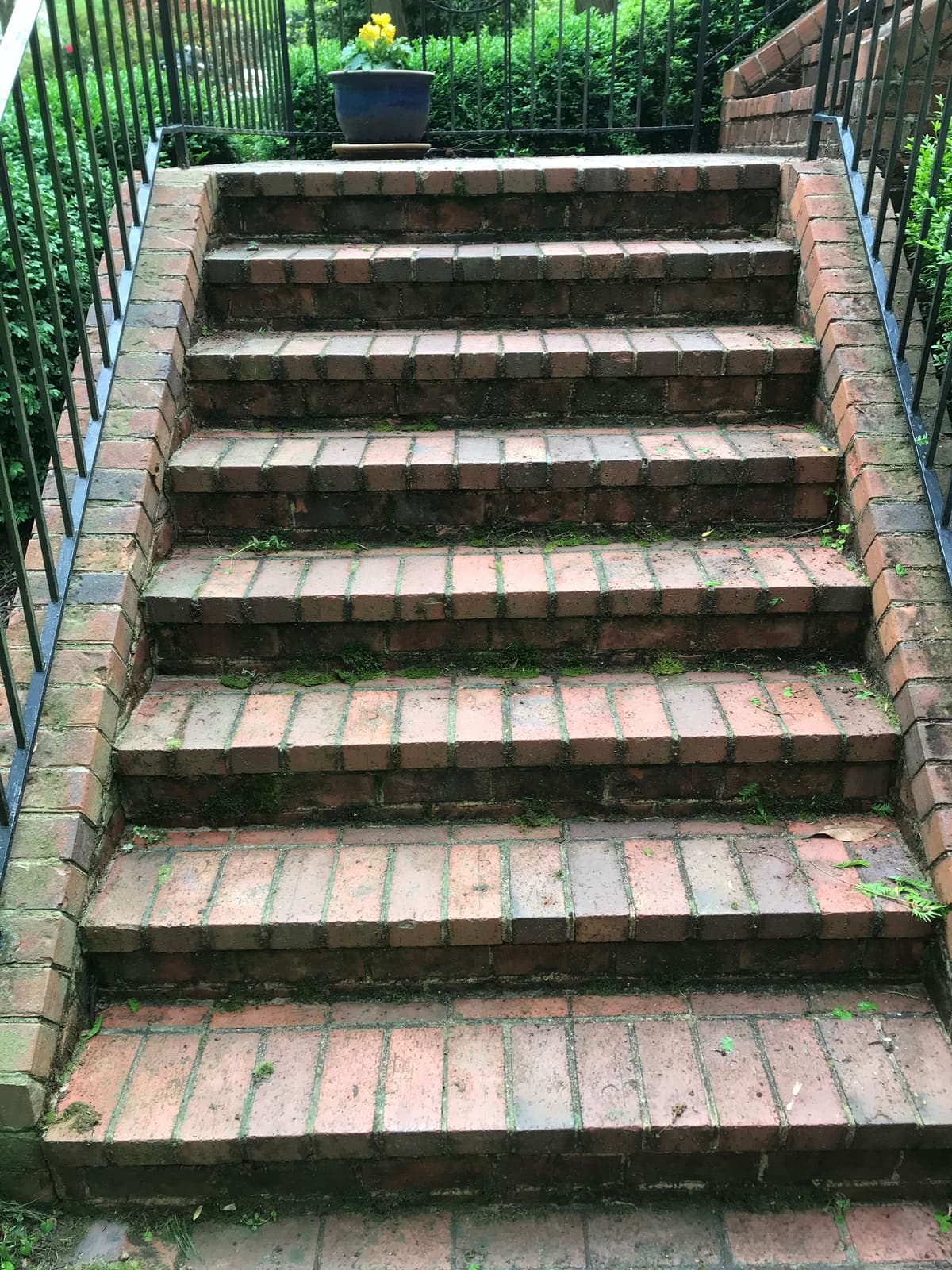
After the clean
Cleaned brick can be sealed with a breathable masonry sealer, which slows moss and efflorescence returning while still letting the wall release moisture. Breathability matters on brick, since a sealer that traps moisture inside can cause worse problems than it prevents.
If your brick has failing or missing mortar, that is worth repointing before or after cleaning rather than pressure-blasting around it. An honest assessment will flag that instead of making it worse. A photo or two of the brick is enough for a free quote.