
Artillery Fungus on Siding: The Stubborn Black Spots From Mulch
If the lower part of your siding is peppered with tiny, tar-like black dots that seem cemented on and shrug off normal washing, you are probably dealing with artillery fungus. It is one of the most frustrating things that lands on a home exterior, and it comes from an unexpected source: the mulch in your garden beds.
Here is what it is, why it is so stubborn, and what can realistically be done.
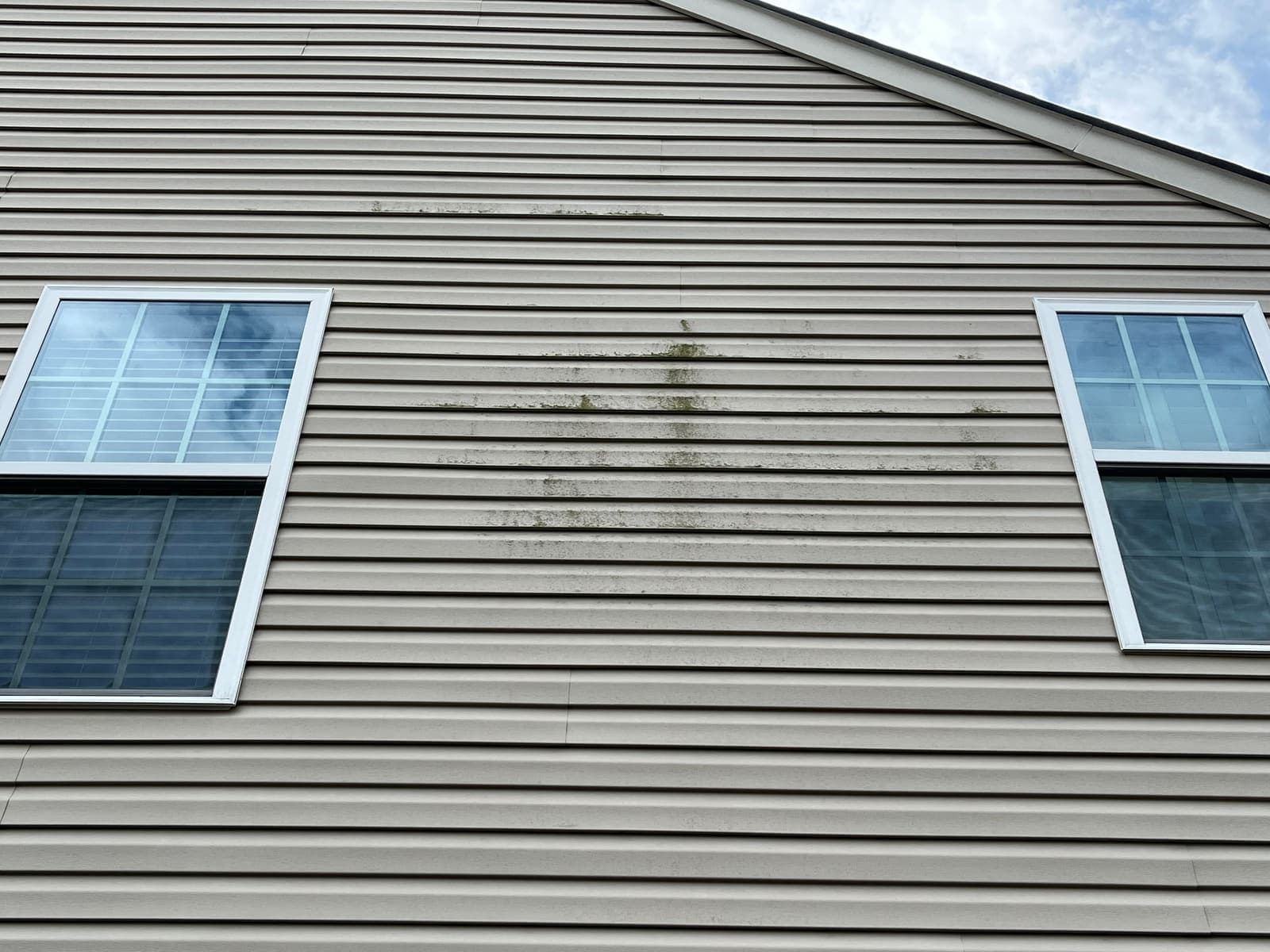
What artillery fungus is
Artillery fungus is a mould that grows in decomposing organic mulch, especially the bark and wood mulches common in garden beds. It forcibly shoots tiny spore masses toward light and light-coloured surfaces, which is why they land on siding, and once they hit, they cling with a strong adhesive and dry into hard, tar-like dots. They are usually worst on the lower siding near mulched beds.
Unlike algae, which is a film you can break down, artillery fungus is a physical speck glued to the surface, which is what makes it so hard to remove.
Why it is so hard to remove, and what helps
Because each spot is individually stuck on, there is no easy chemical that simply dissolves them all without risk to the siding. A thorough soft wash and specialised treatment can lift many of them and clean the surrounding surface, but on badly affected siding some spots are genuinely stubborn, and an honest assessment says so rather than promising a perfect result.
Caught early and in moderate numbers, the results are much better, which is why it is worth addressing before a light spattering becomes a heavy one.
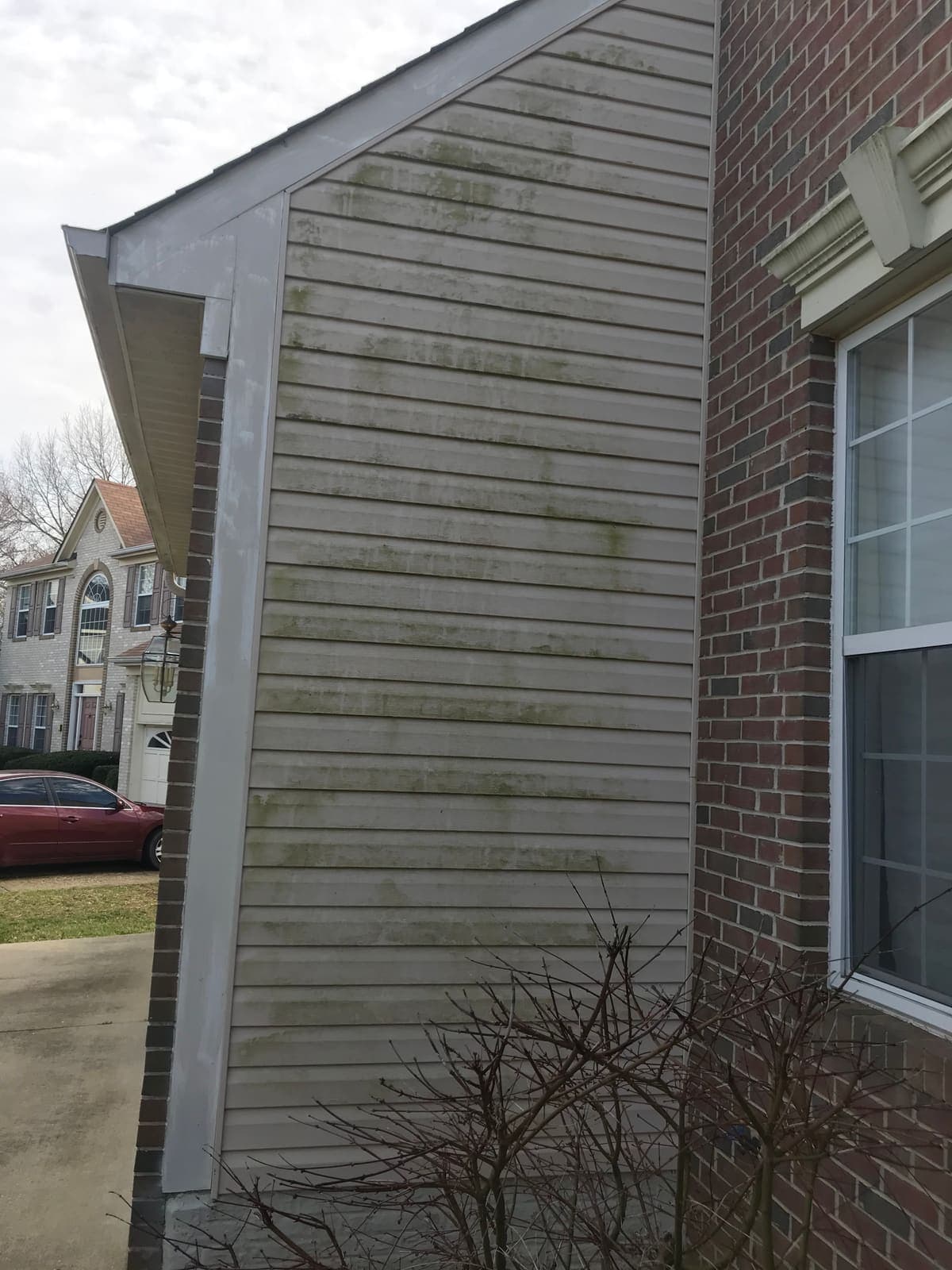
Prevention is the real fix
Because removal is difficult, prevention matters most. The source is the mulch, so switching mulched beds near the house to alternatives that do not host artillery fungus, such as certain bark types that resist it, or inorganic options like gravel or rubber near the walls, greatly reduces new spotting. Keeping mulch turned and not letting it sit and decompose against the house helps too.
If you keep getting new black spots every year no matter how often you clean, the mulch beside the house is almost certainly the culprit, and changing it is the lasting solution.