
Wood vs Composite Decking: A Maintenance Comparison for BC Weather
Wood and composite are the two main choices for a deck, and both have a real place in our climate. If you are deciding between them, or just want to look after the deck you have, it helps to understand honestly how each holds up to coastal BC weather and what cleaning each actually needs. Neither is maintenance-free.
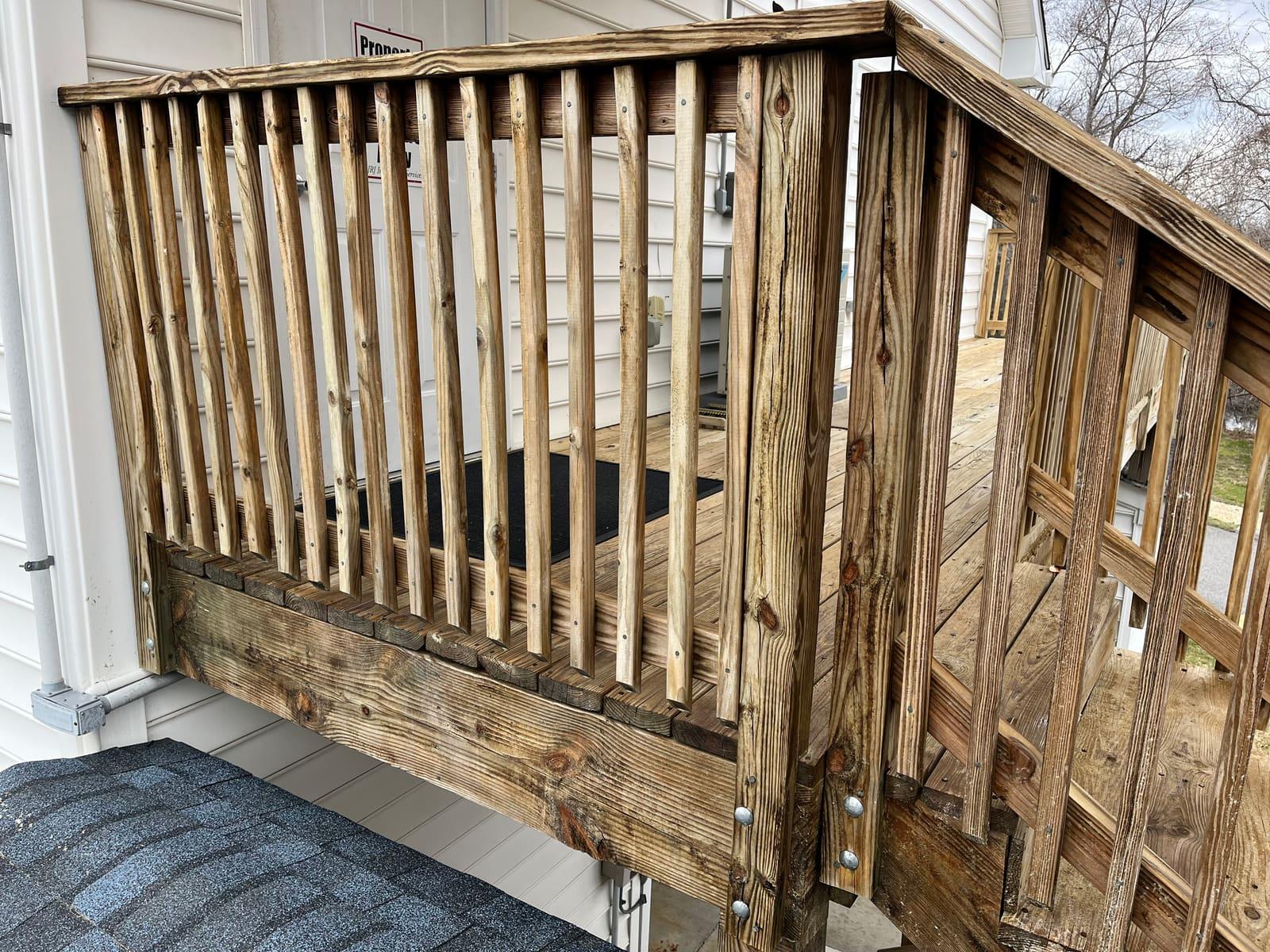
Wood decking
Wood, cedar or pressure-treated, is beautiful and can be refinished, but it is the higher-maintenance option here. It greys under UV, grows algae and mildew on the damp shaded areas, and needs periodic cleaning plus re-staining or sealing to protect it and keep its colour. Left unmaintained, wood weathers, can split and rot over time, and turns slick with growth.
The upside is that wood can be brought back and refinished repeatedly, so a neglected wood deck is usually recoverable with cleaning and a fresh finish.
Composite decking
Composite resists rot and never needs staining, which is its big advantage, but maintenance-free is a myth in our climate. Composite still grows mould and algae in the shade and the gaps between boards, so it needs regular cleaning to stay clean and non-slip, and it must be cleaned within the manufacturer's pressure limits or the warranty and the cap surface are at risk.
So composite trades the staining cycle of wood for a still-necessary cleaning routine, with the bonus that there is no refinishing to do.
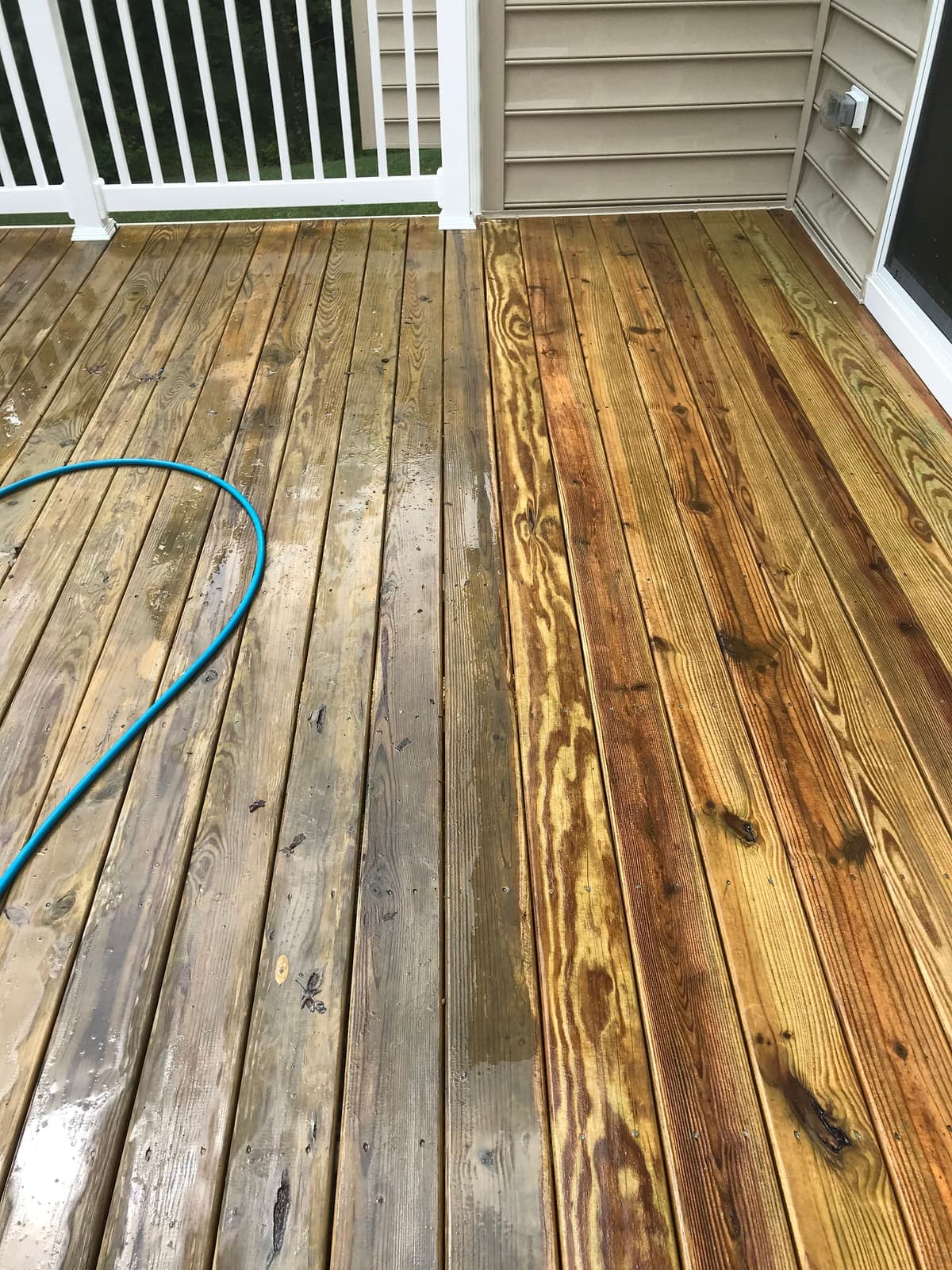
The honest comparison
Both need regular cleaning in our climate, that part is unavoidable given the damp and shade. The real difference is the finish: wood adds a re-stain or seal cycle to protect and colour it, while composite skips that but must be cleaned within its pressure limits. Neither escapes the algae and mould that our conditions grow on any horizontal surface.
Whichever you have, the cleaning approach is gentle and chemistry-led rather than high-pressure, since both wood and composite are damaged by too much pressure. If you are choosing, weigh the look and refinishing of wood against the lower-upkeep, no-stain composite, but plan on cleaning either way.