
How Permanent Lights Are Installed (and Why They're Invisible by Day)
Permanent lights sound involved, but a professional install is a tidy, one-day job that leaves almost nothing visible in daylight. Understanding what goes into it helps explain why the result looks so clean compared with strings of bulbs, and why it lasts. Here is how a permanent lighting system goes on a home.
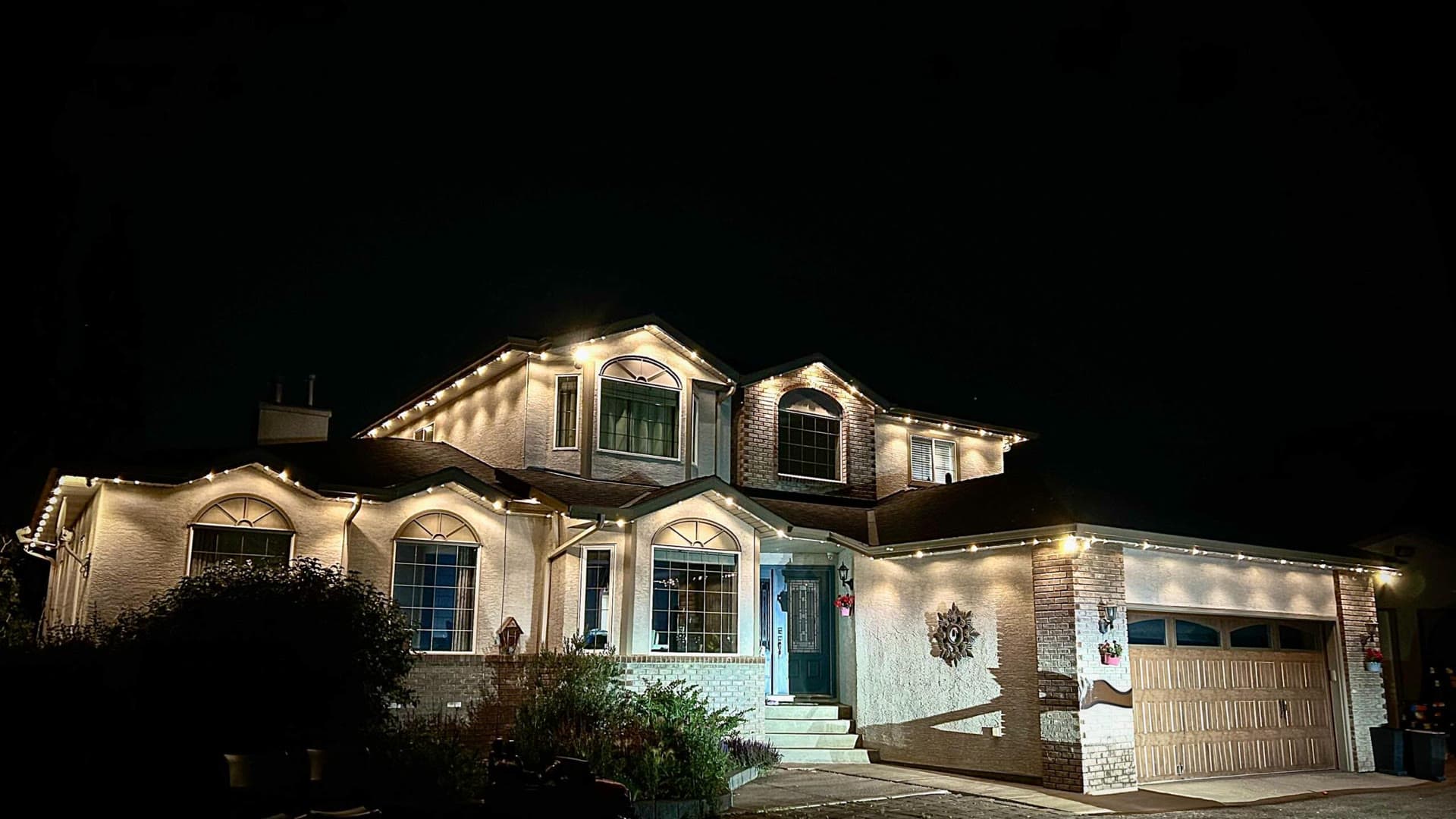
The design and the track
It starts with a design consult that maps your rooflines, peaks and the sections you want lit, and plans the power and controller placement. Then a low-profile aluminum track is mounted tight under the roofline. Crucially, the track is colour-matched to your soffit or fascia, so it blends in, which is the main reason the system is nearly invisible by day.
The track holds the LED points in an even, precise line, which is why a permanent system looks so much cleaner than a hand-hung string with its sags and gaps.
The LEDs, wiring and controller
Individually controllable RGBW LED points sit in the track, spaced evenly, and are wired with hidden, weatherproof connections rather than exposed cords. The wiring is routed discreetly, and a controller is installed and connected so the whole system runs from an app. Connections are sealed against our rain, since the system lives outdoors year-round.
Because the mounting fastens to the fascia rather than penetrating the roof, a proper install does not compromise your roofing or its warranty.

Handover and daytime invisibility
With the hardware in, the app is set up, favourite scenes are saved, and you are shown how to control zones, colours and patterns. Most single-family installs are completed in a single day, and you finish with a system ready for every occasion.
The daytime test is where quality shows. A colour-matched track tucked under the eave reads as a subtle trim line from the street, unlike cheap stick-on products that look like taped-up rope light in daylight. That invisibility by day, combined with the display by night, is the whole point.