
Why Your Gutters Overflow Even After Cleaning (Hidden Downspout Clogs)
It is a frustrating scene: you scooped the gutters clean, and the next heavy rain they still sheet water over the edge. The gutters look empty, so what gives? The answer is almost always a clog you cannot see, down in the downspout.
Here is why it happens and how a proper cleaning deals with it.
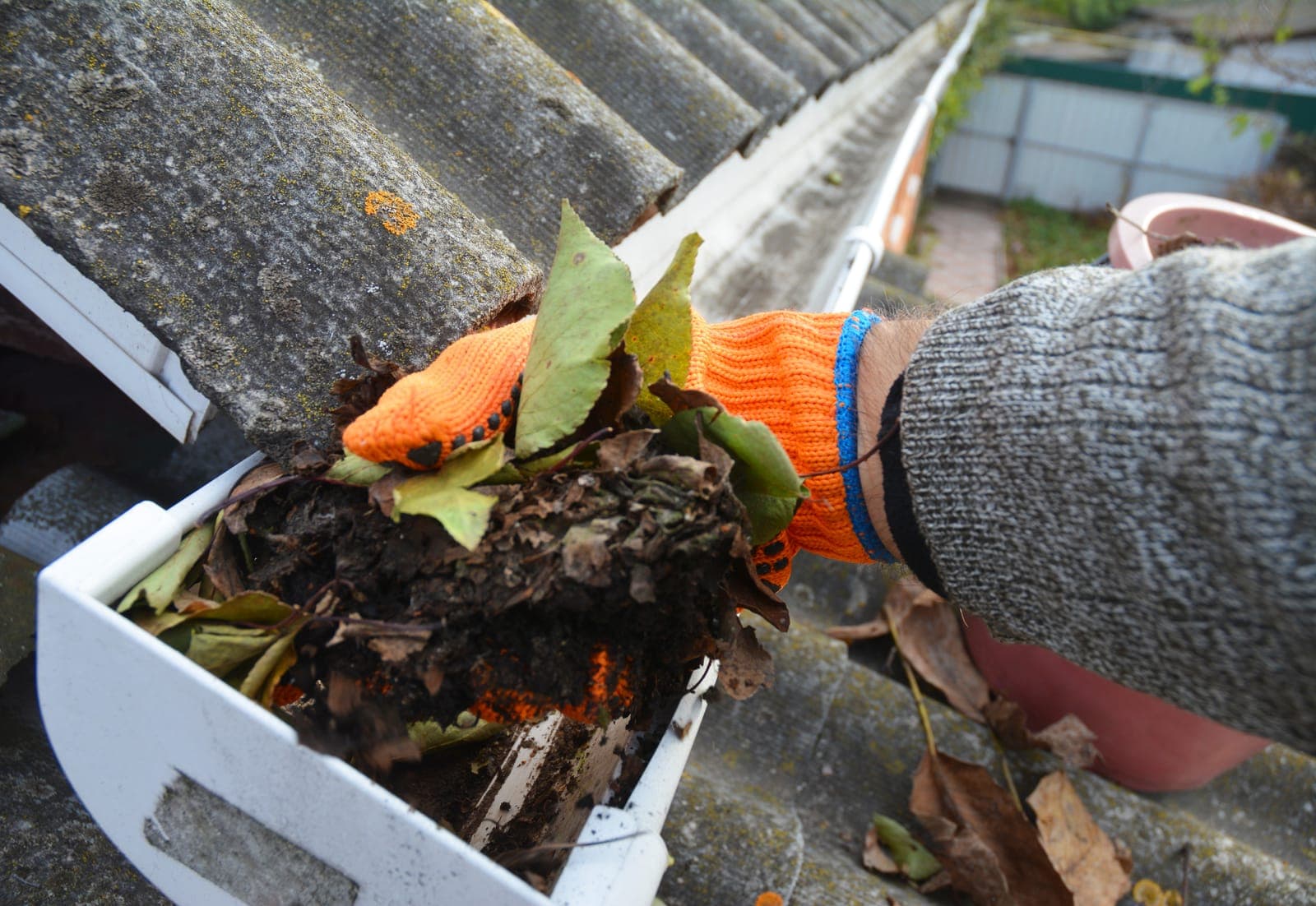
The clog is in the downspout, not the gutter
Scooping clears the open trough, but debris collects and compacts where the gutter turns down into the downspout, and further down at elbows and the outlet to the ground. That plug can be completely hidden from the top while still blocking the flow. The gutter fills and overflows because the water has nowhere to go.
Needles and fine grit are the usual culprits here, packing into the elbows and setting like a cork. You can have spotless-looking gutters and still get overflow if that plug is left in place.
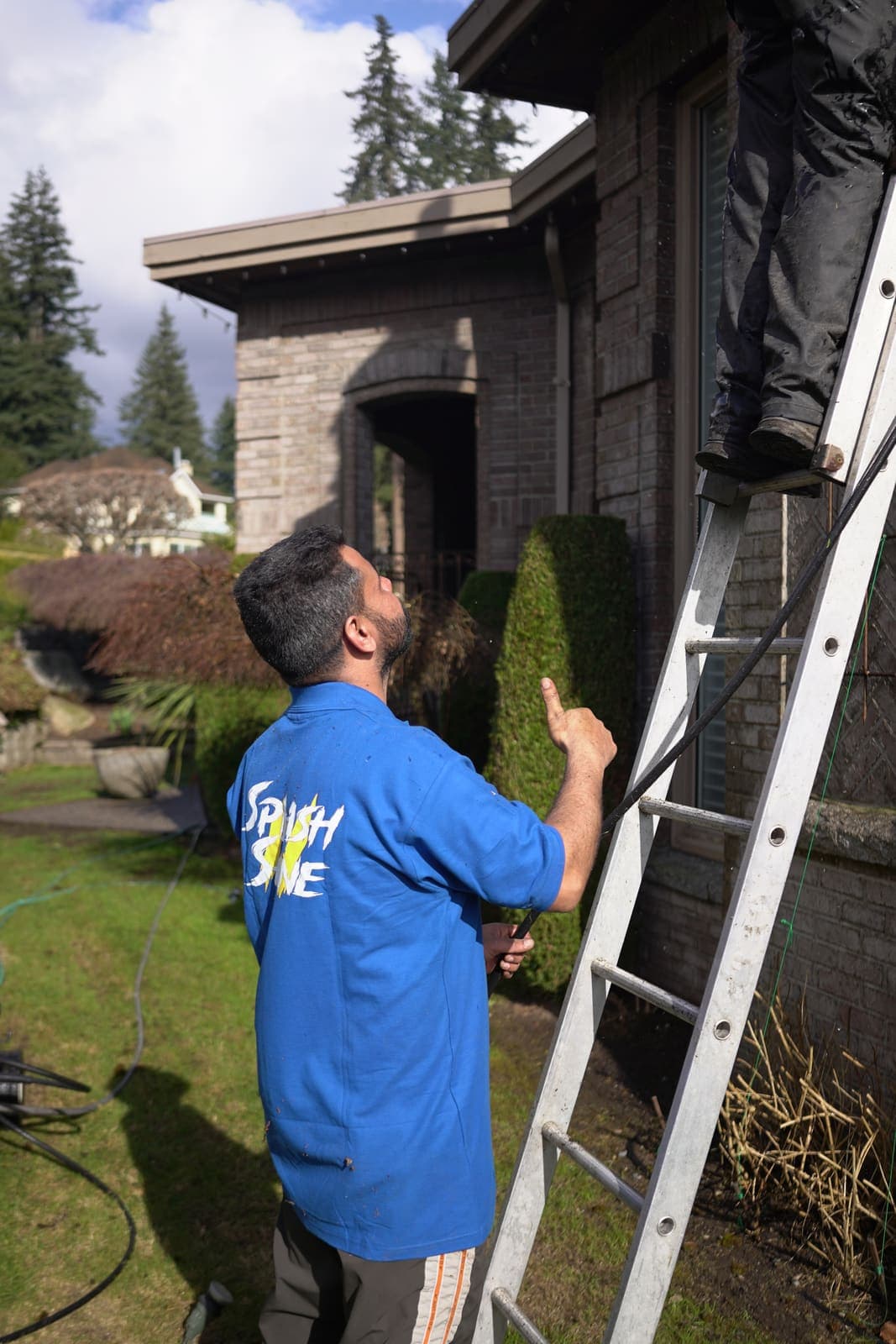
Why flushing is the step that matters
This is why a proper gutter service does not stop at scooping. Each downspout is flushed with water and checked until it runs freely at the bottom. That is the only reliable way to confirm the whole system drains, not just the visible trough. A cheap clean that skips the flush is exactly how you end up with clean-looking gutters that still overflow.
If a downspout will not clear with flushing, the blockage may be lower down, in an underground drain line. A good crew will tell you that is the issue rather than leaving you guessing.
Preventing repeat clogs
Downspout clogs come back fastest on homes under conifers, where fine needles feed the elbows continuously. More frequent cleaning helps, and fine micro-mesh gutter guards keep the debris out of the system in the first place so the downspouts stay clear.
If your gutters overflow again soon after a clean, it is worth asking whether the downspouts were actually flushed. That single step is the difference between a clean that works and one that only looks like it did.